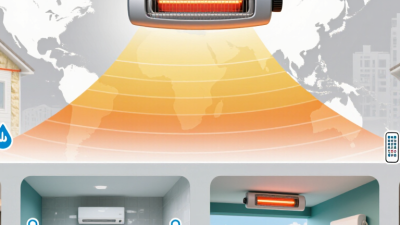
What Is the Best Infrared Heater in China?
Choosing the best Infrared Heater in China depends on more than wattage or a polished product photo. The right model should suit the room, the local climate, and the way people actually use the space. A heater that feels comfortable beside a desk may leave a drafty living room cold. Small details matter: heating distance, reflector shape, controls, noise, and how steady the warmth feels after an hour.
For a practical comparison, this guide uses a simple rule: “Match the heater to the room before comparing its features.” This is an editorial principle, not a verified quotation from a named industry expert. A real expert quotation should be checked against a reliable source before publication. That matters. Infrared-heating performance varies with installation, room layout, and product design, so claims deserve careful scrutiny.
We will look at common heater types, key specifications, safety features, and the questions buyers should ask Chinese manufacturers. The best choice is rarely the one with the biggest number on its label. Check stated coverage against your actual room dimensions. Look for clear instructions, accessible service support, and transparent product information. And be realistic: no heater can correct poor insulation or make every corner equally warm. A little skepticism helps. The comparison that follows aims to make those trade-offs easier to see.
What Infrared Heaters Are and How They Work
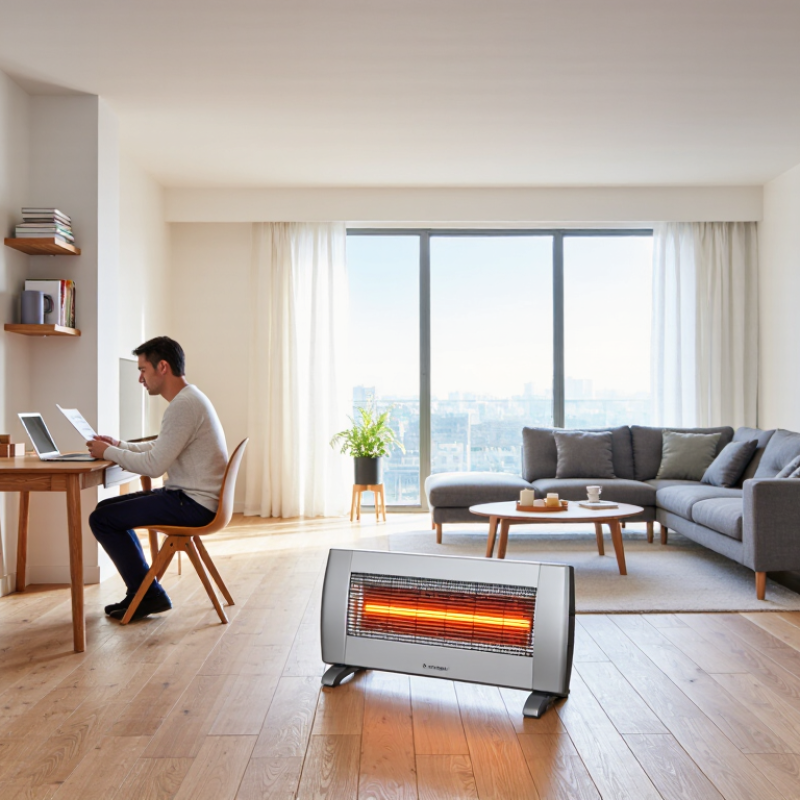
An infrared heater warms people and nearby surfaces directly, rather than relying only on circulating warm air. Its heating element emits infrared radiation, which is absorbed by a floor, desk, or person in its path. Those warmed surfaces then release some heat into the surrounding air. That is radiant heat. Stand within the heater’s coverage, and warmth can feel immediate; move behind an obstruction, and the effect may drop.
The U.S. Department of Energy’s Energy Saver guidance says electric resistance heaters convert nearly all the electricity they use into heat at the point of use. This includes electric infrared models, but the figure describes conversion, not how evenly a room feels warm. A heater aimed at a reading chair may make that spot comfortable while a tiled corner stays chilly. The room still matters.
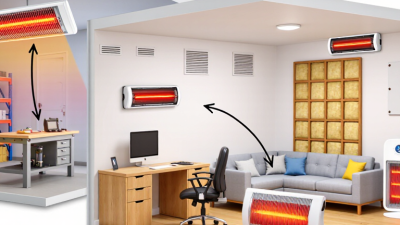
Infrared units are often useful for targeted warmth, such as beside a workbench or in a frequently used seating area. Their performance depends on placement, heater output, ceiling height, and drafts. A clear path between the emitter and the occupied area helps. Not magic. In practice, a small change in angle can shift the warm zone, while poor insulation lets heat escape. I would treat heater specifications as a starting point, not a promise of comfort across the whole room.
Types of Infrared Heaters Available in China
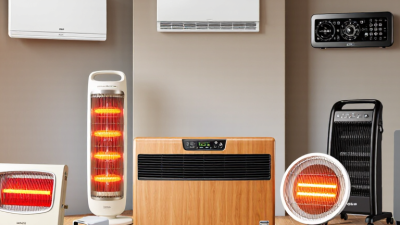
Infrared heaters sold in China come in several forms, and the right choice depends on where the warmth is needed. Quartz and halogen models heat quickly, making them useful beside a desk or in a chilly bathroom. Their bright glow can feel harsh in a dark room. That matters.
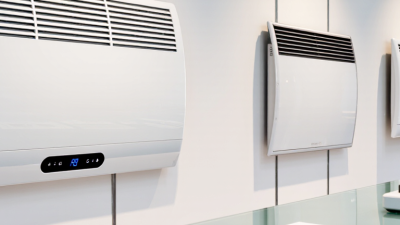
Carbon-fiber heaters also provide direct radiant warmth, often with a softer-looking glow. They suit people who sit in one place, since nearby objects and skin warm more quickly than the whole room. Ceramic and far-infrared panel heaters usually produce a more even, low-glare feel. Wall-mounted panels can save floor space, but their comfort depends on placement and room insulation.
Infrared gas heaters are another option, mainly for suitable, well-ventilated open or semi-open areas. They are not a simple indoor substitute for electric models. Check the heater’s intended setting, safety instructions, and rated output before buying. A common mistake is choosing by wattage alone; distance, ceiling height, and cold drafts also affect comfort. Product descriptions may use “far infrared” loosely, so compare technical details rather than relying only on the label. Even then, a panel can feel underwhelming if it is mounted too far away.
What Is the Best Infrared Heater in China? Types of Infrared Heaters Available
Approximate wavelength bands commonly used to describe infrared radiation (micrometres, µm)
Short-wave, medium-wave, and long-wave describe infrared output by wavelength; exact boundaries can vary by convention and product. There is no single best type for every setting—choose based on the space, heating distance, response time, and intended use.
Criteria for Evaluating Infrared Heaters
The best infrared heater in China depends on the room, not just its advertised power. Chinese homes range from compact apartments to drafty rooms with high ceilings. Match the heater’s rated output to the space, and consider insulation, window size, and how long people stay there. A heater may feel warm nearby while leaving the far side of a room cool. Test comfort from your usual seat, not only beside the unit.
Check how evenly it radiates heat, whether its controls hold a steady temperature, and how much energy it uses during a typical session. Compare measured consumption where possible; a large power rating alone does not prove poor efficiency. Numbers can mislead.
Look for clear safety instructions, stable mounting or placement, overheat protection, and a casing that stays reasonably cool. Also check noise, cleaning access, and cable length. Small details matter. One imperfect point: advertised room coverage can be optimistic, especially in a drafty space. Treat it as a guide, then judge the heater against your actual room and daily routine.
How Heater Performance Varies by Use and Setting
Infrared heaters are often judged by wattage, but the best choice depends on where and how they are used. In a drafty workshop, a directional heater can warm someone at a workbench without heating the entire room. Its reach is limited, though. A cabinet or partition can block the warmth, and distance can make it feel weaker. Rated output matters, but so do placement and line of sight.
In a living room, a broad radiant panel may feel comfortable near a sofa, while a small portable unit may suit short periods at a desk. High ceilings and cold walls can change how quickly a space feels warm. Infrared units warm nearby people and surfaces directly; they do not always make the whole room feel evenly heated. That distinction is easy to overlook. I would compare the heater’s coverage guidance with the room layout, rather than relying on wattage alone.
Bathrooms and enclosed balconies need extra care. Check the installation and clearance instructions, especially where moisture or nearby furnishings are concerns. In open or semi-outdoor areas, wind can carry away warmth, so a heater that feels effective indoors may disappoint outside. China’s winter conditions also vary by region and building, making one universal “best” option unlikely. A small test in the intended spot can reveal more than a showroom impression, though even that may not reflect colder days.
How to Identify the Best Infrared Heater for Your Needs
Choosing the best infrared heater for your needs starts with the space, not the product label. Measure the room and note its ceiling height, insulation, and cold drafts near windows. Infrared heat warms people and surfaces directly, so it can suit a desk, workshop bench, or seating area. It may feel less even in a large, poorly insulated room. Small details matter. A heater aimed at a chair may leave the far side chilly.
Compare the heater’s rated output with the area it is meant to serve, then check whether it is portable, wall-mounted, or ceiling-mounted. Look for adjustable settings, a timer, overheat protection, and clear installation instructions. For damp locations, verify that its stated protection rating matches the conditions; do not assume every model is suitable. When buying from a supplier in China, request test documentation and confirm the voltage, plug, and certifications needed in your market. Specifications can be confusing, and wattage alone does not predict comfort. Think about where you will sit, how long you will use it, and whether nearby objects could block its radiant heat.