Leave Your Message

10 Infrared Heater Buying Tips for Global Buyers

Choosing an Infrared Heater for international use requires more than comparing wattage and price. The buyer must examine room size, ceiling height, insulation, voltage, plug type, mounting position, control systems, and local safety certification. Small details matter. A heater designed for a dry workshop may perform poorly in a humid bathroom. An outdoor model may need a suitable ingress-protection rating, while a nursery demands careful surface-temperature control.

The International Energy Agency’s Energy Efficiency 2023 report states that buildings consume about 30% of global final energy and produce roughly 26% of energy-related emissions. The United Nations Environment Programme’s Global Status Report for Buildings and Construction also identifies buildings as a major global energy-use sector. These figures explain why efficient heating decisions deserve technical attention. The U.S. Department of Energy notes that radiant systems can deliver heat directly to people and surfaces, reducing reliance on moving warm air in suitable conditions. Results still depend on insulation and room design. Estimates vary.

Thermal-comfort researcher P. Ole Fanger’s widely cited definition remains useful: “Thermal comfort is that condition of mind which expresses satisfaction with the thermal environment.” It reminds buyers that a lower energy bill does not automatically mean better comfort. This guide presents ten practical buying tips for global buyers, including heating coverage, operating cost, materials, controls, maintenance, and regional compliance. Some assumptions may need reconsideration. A wattage chart alone can mislead. The best choice is the model that fits the space, climate, user habits, and verified safety requirements.
10 Infrared Heater Buying Tips for Global Buyers

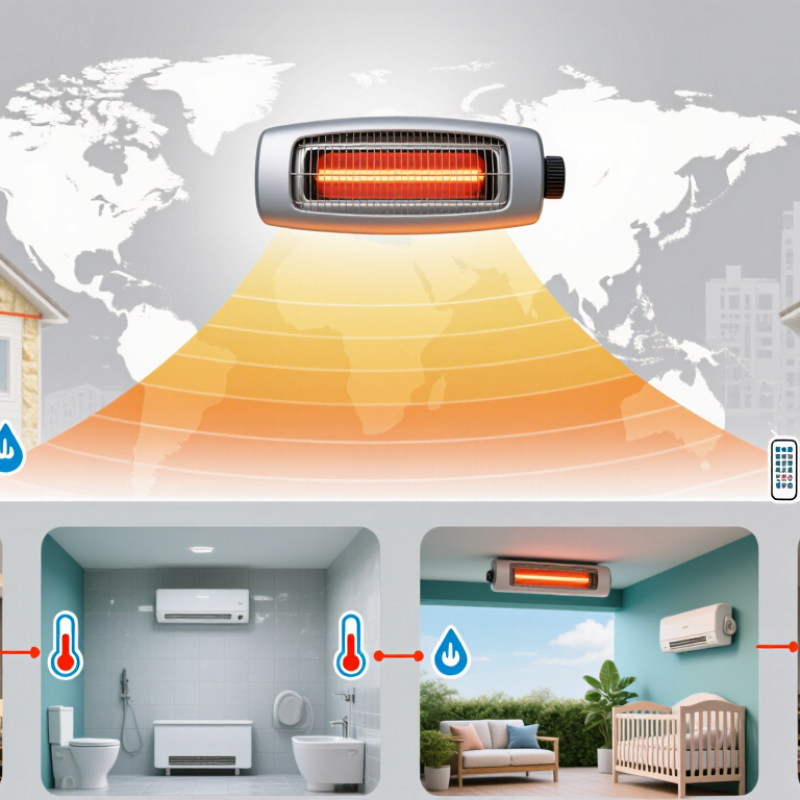
Map 0.78–1,000 μm Infrared Bands to Heating Applications

10 Infrared Heater Buying Tips for Global Buyers

Map 0.78–1,000 μm Infrared Bands to Heating Applications

Wavelength matters more than many product listings suggest. ISO 20473:2007 classifies infrared radiation as IR-A at 0.78–1.4 μm, IR-B at 1.4–3 μm, and IR-C at 3–1,000 μm. These ranges guide emitter selection, but they do not guarantee performance.

IR-A emitters, often operating near 0.78–1.4 μm, deliver rapid, concentrated heating. They suit metal preheating, paint curing, and high-speed drying lines. IR-B, roughly 1.4–3 μm, can offer deeper absorption in some materials, including textiles, coatings, and food surfaces. IR-C, from 3–1,000 μm, is common in ceramic emitters and low-temperature radiant panels. It works well for room comfort and surface warming. Test carefully. Material moisture changes absorption significantly.

The International Energy Agency’s The Future of Heat Pumps (2022) states that space heating represents about half of global building energy use. This makes zoning, controls, and insulation important buying factors, not optional extras. U.S. Department of Energy guidance also explains that radiant systems heat people and surfaces directly, allowing targeted comfort in suitable spaces. A dark steel sheet may heat quickly under short-wave radiation, while a damp wall may respond slowly under long-wave energy. Wavelength charts simplify reality. Measure surface temperature, mounting distance, warm-up time, and local electrical requirements before ordering. My practical mistake was trusting rated output without testing airflow and reflective surfaces. That assumption needed correction.
10 Infrared Heater Buying Tips for Global Buyers

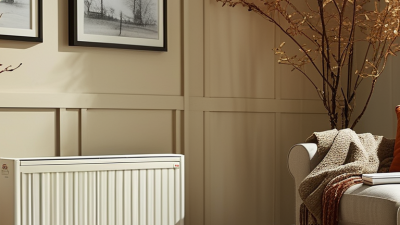
Match the heater wavelength to the material, heating distance, required response time, and process temperature. The chart shows commonly used engineering ranges from 0.78 to 1,000 μm; exact band boundaries may vary by industry and standard.

Buying Checklist

  1. Identify the material’s absorption range before selecting the heater band.
  2. Choose shorter wavelengths for fast response and high surface power density.
  3. Choose longer wavelengths when deeper or more uniform radiant heating is needed.
  4. Check the target temperature, heating cycle, and allowable warm-up time.
  5. Match heater output and surface temperature to the distance from the product.
  6. Consider whether the process requires surface heating, through-heating, drying, or curing.
  7. Verify electrical voltage, frequency, power density, and control compatibility.
  8. Assess airflow, moisture, coatings, and surface color because they affect absorption.
  9. Specify safety controls such as over-temperature protection, shielding, and emergency shutoff.
  10. Compare maintenance access, replacement element availability, installation requirements, and total operating cost.

Typical applications are indicative rather than exclusive. Real performance depends on material composition, thickness, moisture content, emissivity, geometry, and heater-to-product distance.

Calculate Capacity with 1,500 W Loads: 12.5 A at 120 V, 6.5 A at 230 V

10 Infrared Heater Buying Tips for Global Buyers

A 1,500 W infrared heater draws 12.5 A at 120 V. At 230 V, it draws about 6.5 A. Use the formula current = power ÷ voltage before choosing a model. This simple check prevents many purchasing mistakes. A 120 V unit may need a dedicated 15 A circuit, depending on local electrical rules and existing loads. At 230 V, a 10 A circuit may appear sufficient, but installation conditions still matter.

Check the heater’s rated voltage, frequency, plug type, and allowable operating environment. Do not assume a travel adapter makes an incompatible heater safe. Confirm the outlet, wiring, and breaker with a qualified electrician. For long operating periods, some regulations treat heating equipment as a continuous load and require extra circuit capacity. Rules differ between countries. Verify them locally.

Measure the room, ceiling height, insulation, window area, and outdoor temperature. A radiant heater warms people and surfaces directly, so its comfort may differ from a fan heater’s performance. I have found that a small room can feel warm near the panel while corners remain cold. That detail is easy to miss. Compare wattage with coverage guidance, not wattage alone. Leave safe clearance around curtains and furniture, and inspect the cable for heat after initial use. Recheck the calculation if the voltage changes. A 1,500 W rating remains 1,500 W, but the current does not. անհարմար

Check IEC 60335-2-30 Safety, CE/UL Compliance, and 50/60 Hz Ratings

Global buyers should treat IEC 60335-2-30 as a purchasing checkpoint, not decorative paperwork. This standard addresses household and similar electric room-heater safety. Ask for the exact edition, test report, and national deviations. Confirm protection against overheating, abnormal operation, insulation failure, and accessible hot surfaces. Check whether the report covers the exact model, power rating, and enclosure.

CE marking requires a valid EU Declaration of Conformity and supporting technical documentation. It is not one universal safety certificate. For North American shipments, request evidence of applicable UL requirements and current third-party certification. Verify the certification file directly. A printed logo can look convincing. The weak point is often incomplete documentation.

Match voltage and frequency before ordering. A 230-volt, 50-hertz heater may not suit a 120-volt, 60-hertz market. Check the nameplate, plug, fuse, and rated wattage. The International Energy Agency’s Energy Efficiency 2023 report identifies buildings as using about 30% of global final energy. Efficient controls matter, but safety comes first. The U.S. Consumer Product Safety Commission reported an average of about 1,700 portable-heater fires annually during 2017–2019, with roughly 80 deaths and 160 injuries. Require tip-over shutoff, thermal cutoff, stable feet, and flame-resistant materials. Some suppliers still provide vague efficiency claims. Recheck them against measured input power, thermostat behavior, and independent test evidence.

Choose IEC 60529 IP20–IP65 Protection for Indoor and Wet Locations

10 Infrared Heater Buying Tips for Global Buyers

Protection starts with the installation environment, not the product photograph. IEC 60529 defines IP ratings through solid-particle and water-ingress tests. IP20 protects against fingers and objects larger than 12.5 millimetres, but offers no water protection. It suits dry indoor rooms, such as bedrooms, offices, and covered corridors. IP44 resists splashing water from multiple directions. That makes it more practical for bathrooms, utility rooms, and sheltered balconies. IP65 is dust-tight and protects against low-pressure water jets. It is useful in workshops, semi-outdoor areas, and locations exposed to cleaning sprays. It is not designed for immersion. Small detail, major consequence.

UNEP’s 2023 Global Status Report states that buildings use approximately 30% of global final energy and create about 26% of energy-related emissions. Correct heater selection can support more controlled building operation, but IP protection does not prove energy efficiency. Check the rated voltage, thermostat accuracy, grounding, mounting clearance, and local certification separately. Condensation remains a real concern, especially when a cold metal heater enters a humid room. I have seen buyers choose IP65 and overlook cable glands or wall penetrations. The enclosure was protected; the installation was not. IEC 60529 also does not measure corrosion resistance, surface temperature, or resistance to chemicals. For coastal sites, dusty factories, or frequent washdown areas, request test documentation and installation guidance. Recheck the rating after every modification.

Compare Controls, Rated Life, Warranty Terms, and Total Ownership Cost

When comparing infrared heaters, inspect the control system as carefully as the heating element. A basic thermostat may suit a small room, but larger facilities often need zoning, timers, occupancy sensors, or remote monitoring. Ask whether controls work with your existing building system. Request wiring diagrams before purchase. Small details matter.

Rated life should be read as a testing estimate, not a promise. Confirm the test conditions, operating hours, installation angle, and expected duty cycle. A heater running twelve hours daily faces different stress from one used occasionally. Check replacement element availability and local service skills. I once reviewed a project where the heater lasted well, but unavailable parts caused costly downtime. That assumption was risky.

Warranty terms can change the real price. Review coverage for elements, controls, labor, shipping, and corrosion. Check whether professional installation is required and whether proof of maintenance affects claims. Calculate total ownership cost over the expected service period. Include purchase price, installation, electricity, inspections, replacement parts, and disposal. Use your local energy tariff, not a supplier’s generic estimate. A cheaper unit may consume more power or require frequent service. Leave room for uncertainty; climate, insulation, and usage patterns rarely match the sales model exactly.

10 Infrared Heater Buying Tips for Global Buyers - Compare Controls, Rated Life, Warranty Terms, and Total Ownership Cost

Buying Tip Comparison Dimension Quartz / Halogen Infrared Carbon Infrared Ceramic Panel Infrared Metal Tubular Infrared
1Match the heater to the application Typical best use Fast spot heating, workshops, patios, bathrooms, and intermittently occupied areas. Comfort-focused indoor heating and lower-glare residential applications. Quiet wall or ceiling heating where an even surface temperature is preferred. Commercial, industrial, greenhouse, and high-duty-cycle heating.
2Check the heating response Warm-up and cool-down behavior Very fast response; produces noticeable radiant heat within seconds and cools quickly after shutdown. Fast response with a softer radiant output; usually slower than short-wave halogen elements. Slow to moderate response; retains heat after power is switched off. Moderate response; durable tubes may continue releasing heat briefly after shutdown.
3Compare control options Common controls Mechanical switch, remote control, thermostat, timer, and sometimes multi-power settings. Remote control, digital thermostat, timer, programmable schedule, and multi-stage power control. Electronic thermostat, weekly schedule, room sensor, open-window detection, and app-compatible controls on selected models. Industrial thermostat, relay or contactor control, external sensor, timer, and building-management-system integration.
4Verify electrical compatibility Voltage, frequency, and current Common ratings include 120 V or 220–240 V, 50/60 Hz; a 1,500 W unit draws about 6.25 A at 240 V or 12.5 A at 120 V. Common ratings include 120 V or 220–240 V, 50/60 Hz; confirm plug, wiring, and circuit capacity before installation. Often supplied in 220–240 V versions for fixed installation; some residential models are available at 120 V. Frequently specified for 220–240 V, 380–415 V, or other regional industrial supplies; professional electrical installation may be required.
5Assess rated element life Typical rated life under proper operating conditions Approximately 2,000–7,000 hours, depending on lamp construction, vibration, switching frequency, and operating temperature. Approximately 5,000–10,000 hours; life is affected by filament temperature, mounting position, and power cycling. Approximately 10,000–20,000 hours for the heating element; electronic controls may have different service lives. Approximately 10,000–20,000 hours for many heavy-duty tubular elements; contamination and thermal shock can reduce life.
6Review safety features Protection to request Overheat protection, tip-over protection for portable units, safety grille, splash rating where applicable, and automatic shutoff. Overheat protection, tip-over switch for portable models, child-lock controls, and an enclosure suitable for the installation location. Surface-temperature control, overheat protection, wall-mount security, and appropriate ingress protection for damp rooms. High-temperature cable protection, overheat or limit thermostat, guarded elements, secure brackets, and site-specific protective controls.
7Compare warranty terms carefully Typical market warranty structure Often 1–2 years for the complete unit; replaceable lamps or tubes may have separate coverage exclusions. Often 1–3 years; the heating element, remote control, and cosmetic parts may have different coverage terms. Often 2–5 years for the panel or heating element, with shorter coverage for thermostats and electronics. Often 1–3 years for the complete assembly; industrial projects may negotiate separate element and control warranties.
8Calculate total ownership cost Electricity, replacement, and service Low initial cost is possible, but frequent lamp replacement can raise lifecycle cost in high-use applications. Moderate initial cost and generally moderate replacement needs; compare element price and expected operating hours. Higher purchase price is often offset by longer element life and lower replacement frequency; electronic controls can add service cost. Higher installation and control costs may be justified by long operating life, robust construction, and reduced replacement downtime.
9Measure coverage and mounting needs Coverage guidance Best for directional or zone heating; coverage depends strongly on mounting height, beam angle, insulation, and wind. Suitable for personal comfort and room zones; use heat-loss calculations rather than wattage alone for whole-room sizing. Provides broad, even radiant output; fixed installation requires adequate wall or ceiling clearance and suitable structural support. Well suited to large zones and high ceilings when correctly arranged; professional layout may be needed to avoid hot and cold areas.
10Confirm serviceability and spare parts Maintenance and logistics Check availability of compatible lamps, reflectors, grilles, seals, and replacement power cords in the destination market. Confirm replacement emitters, remote controls, sensors, and mounting hardware; keep installation and operating manuals accessible. Ask about replacement thermostats, control boards, wall brackets, and local technical support before placing a bulk order. Confirm element dimensions, terminal parts, high-temperature wiring, brackets, limit thermostats, and expected spare-part lead times.
Total ownership cost example: For a 1,500 W heater operating for 1,000 hours, electricity consumption is approximately 1,500 kWh. At an electricity rate of US$0.20 per kWh, the energy cost is approximately US$300, excluding purchase price, installation, maintenance, taxes, and replacement parts. Actual cost varies by operating schedule, local electricity tariff, thermostat cycling, voltage, climate, and building heat loss. Infrared heaters convert electricity into heat; control quality and correct sizing reduce unnecessary runtime but do not eliminate the basic electrical energy cost.