China Best Infrared Medium Wave Panel Heater Supplier
Choosing a China-based supplier for an Infrared Medium Wave Panel Heater requires more than comparing prices. Buyers need clear product specifications, consistent communication, and evidence that performance claims are tested. Medium-wave infrared heating can suit targeted heating needs, but results depend on installation, room conditions, and the materials being heated. Details matter.
A reliable supplier should explain rated power, panel dimensions, surface temperature, control options, and recommended mounting distances. Ask for technical data sheets and test records, then check whether they match the model offered. A showroom demonstration may help, but it cannot replace documented measurements. Small differences can matter.
This guide outlines how to evaluate manufacturers, compare panel designs, and assess support before placing an order. It also considers practical points such as packaging, lead times, spare parts, and communication after delivery. These details are easy to overlook when a quotation appears attractive.
There is no single heater that fits every project. A panel that performs well in one space may be unsuitable in another. Buyers should share their application, operating conditions, and installation limits with potential suppliers. Some specifications may still need independent verification. That is worth acknowledging.
By reviewing product evidence alongside supplier experience and service capability, purchasers can make a more informed shortlist. The goal is not to accept the boldest claim, but to find a manufacturer whose information is specific, consistent, and relevant to the intended use.
Medium-Wave Infrared Basics: The 1.4–3.0 μm Wavelength Band
China Best Infrared Medium Wave Panel Heater Supplier
Medium-wave infrared commonly refers to radiation around 1.4–3.0 μm. The exact boundaries can vary by technical reference. This band describes wavelength, not a heater’s complete output. An emitting panel usually produces a spread of wavelengths, shaped by its surface temperature and material. The boundary is useful, but not perfectly tidy. That detail is easy to overlook.
For a panel heater, infrared energy travels across the space and is absorbed by people, floors, walls, and furnishings. A clear path between the panel and target can make warmth feel more direct. A desk, partition, or thick curtain may block part of that path. Room temperature still matters; infrared heating does not make cold air disappear. When comparing suppliers, ask for measured output, installation guidance, and test conditions—not just a wavelength label.
Tips: Check the panel’s recommended mounting height and keep its face unobstructed. Note how quickly nearby surfaces warm during a trial. Results can differ with room layout, so one setup may not tell the whole story. Record the distance and conditions; otherwise, comparisons get a little messy.
China Best Infrared Medium Wave Panel Heater Supplier - Medium-Wave Infrared Basics: The 1.4–3.0 μm Wavelength Band
| Dimension |
Value or Range |
Practical Meaning |
| Wavelength |
1.4–3.0 μm (1,400–3,000 nm) |
A commonly used medium-wave band definition; infrared band boundaries can vary between references and industries. |
| Frequency |
Approximately 100–214 THz |
Calculated from the speed of light using frequency = c ÷ wavelength; the shorter wavelength corresponds to the higher frequency. |
| Photon energy |
Approximately 0.41–0.89 eV per photon |
Calculated using E = hc ÷ λ. This is non-ionizing radiation; it does not have enough photon energy to ionize atoms. |
| Wavenumber |
Approximately 3,333–7,143 cm−1 |
An inverse-wavelength measure commonly used in infrared spectroscopy; values increase as wavelength decreases. |
| Equivalent blackbody peak temperature |
About 966–2,070 K (693–1,797 °C) |
Temperatures estimated from Wien’s displacement law, λmaxT ≈ 2,898 μm·K. These are peak-wavelength equivalents, not a specification of a particular heater’s operating temperature. |
| Heating mechanism |
Radiant energy absorbed by exposed surfaces |
Objects and surfaces absorb infrared energy and convert it to heat; the surrounding air is generally warmed later by convection from those surfaces. |
| Typical application considerations |
Localized or process heating where line of sight and surface response matter |
Heating performance depends on emitter spectrum, distance, angle, target material, surface finish, airflow, and installation conditions. |
| Important heater-output note |
A heater’s emission is generally broadband |
The 1.4–3.0 μm range is a band description, not a guarantee that a panel emits only within those limits. Actual output depends on emitter temperature, materials, and design. |
Note: Frequency, photon-energy, wavenumber, and blackbody-temperature values are approximate calculations based on the stated wavelength limits.
How Panel Heaters Convert Electrical Input into Radiant Heat
China Best Infrared Medium Wave Panel Heater Supplier
How Panel Heaters Convert Electrical Input into Radiant Heat
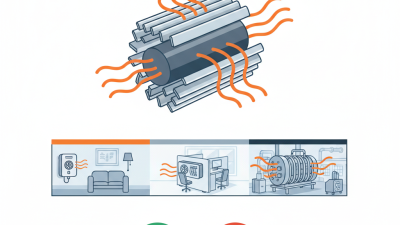
A medium-wave infrared panel turns electrical energy into heat through a resistive element. As current passes through it, the element warms and emits infrared radiation. The panel directs this energy toward nearby people and surfaces, rather than heating the air first. A chair, floor, or person absorbs the radiation and becomes warm. The result is simple. Warm surfaces can then release some heat back into the room.
The experience depends on placement, distance, and room conditions. A panel facing a desk may warm the seated area quickly, while a cold window nearby can still make the room feel uneven. Insulation and ceiling height matter, too. One detail is easy to overlook: radiant warmth does not mean every corner reaches the same temperature.
Tips: Mount the panel with a clear path toward the area you use. Keep the recommended distance from furniture and follow the installation guide. If warmth feels uneven, check panel direction and drafts before increasing the setting.
Key Supplier Specifications: Power, Voltage, W/m², and IEC 60335-2-30
When comparing an infrared medium wave panel heater supplier, check the nameplate power and rated voltage against your project requirements. A 1,200 W panel on a 230 V circuit draws about 5.2 A, before other loads are considered. Confirm the stated voltage range, frequency, and any tolerance in writing. Small details matter.
Ask how the supplier calculates recommended heating area in W/m². The figure is a planning guide, not a guarantee of comfort. Ceiling height, insulation, drafts, and panel mounting distance all affect heat reaching occupants. For example, a cold workshop with a large loading door may need a different design from a well-insulated office of equal floor area. Request the assumptions behind the supplier’s calculation.
Review the test documentation for the exact model, not just a product family. IEC 60335-2-30 covers particular safety requirements for room heaters; check the applicable edition and whether the report matches the heater’s power and voltage configuration. Also verify installation clearances, surface-temperature information, and overheat protection. A tidy specification sheet helps, but it cannot replace a clear test report. Some W/m² estimates may look precise while hiding uncertain site conditions, so allow time for a qualified project review.
China Best Infrared Medium Wave Panel Heater Supplier — Key Specifications
Illustrative panel configurations: surface power density is calculated as rated power divided by radiating area.
The examples show 300 W / 0.75 m² = 400 W/m², 600 W / 1.2 m² = 500 W/m², 900 W / 1.5 m² = 600 W/m², and 1200 W / 2.4 m² = 500 W/m². These are illustrative calculations, not prescribed product ratings. Confirm rated power and voltage for the destination market; 220–240 V AC is a common mains range in many regions. IEC 60335-2-30 covers safety requirements for room heaters and does not define a universal W/m² value.
Matching Heater Output and IP Rating to Industrial Applications
China Best Infrared Medium Wave Panel Heater Supplier
Matching Heater Output and IP Rating to Industrial Applications
Choosing a medium wave panel heater starts with the material, not just the room size. A moving conveyor carrying coated metal may need a different heat profile from a stationary plastic part. Consider the target temperature, heating distance, line speed, and how much heat the workpiece loses to nearby airflow. Small changes matter. A panel mounted too far away can warm the surrounding space more than the product.
Output should be matched to the process, with actual trials where possible. Check surface temperature at several points, not only at the centre. A handheld thermal camera can reveal cool edges or uneven heating. It is useful, though readings can be misleading on shiny surfaces. That detail is easy to miss.
The enclosure’s IP rating should reflect the real environment. A dusty workshop, occasional splashes, and routine washdown are not the same conditions. An IP rating describes protection against solid objects and water ingress; it does not guarantee resistance to chemicals, high temperatures, or cleaning pressure. Review the installation area and maintenance routine before specifying the heater. Sometimes the first estimate is wrong. Measure again after installation, especially when airflow or product spacing changes.
How to Assess Suppliers: Test Reports, Quality Controls, and Warranty Terms
When evaluating a China-based infrared medium wave panel heater supplier, request test reports for the exact model under consideration. Check that the report lists the model number, rated voltage, power, and test conditions. A report for a similar unit may not confirm the performance of your chosen panel. Look for measured surface temperatures and heating uniformity, not just a headline efficiency figure. Ask who performed the tests and when. A polished PDF can still leave gaps.
Quality controls should be visible in the production process. Ask how incoming heating elements and insulation are checked, and whether each finished heater receives an electrical safety inspection. Practical evidence might include dated inspection records, serial-number tracking, and clear procedures for handling failed units. If possible, review sample records or arrange a factory audit. Photos help, but they are not proof. This can feel overly cautious, yet one overlooked connection may cause inconsistent heating later.
Read warranty terms line by line. Confirm the coverage period, which components are included, and who pays for shipping, labor, or replacement parts. Ask how claims are submitted and how quickly the supplier responds. Clarify whether improper installation or commercial use changes coverage. Vague promises are difficult to rely on. Even good suppliers may have imperfect paperwork; request written clarification before placing an order.