Leave Your Message

How to Choose the Right Heater Pipes for Global Sourcing

Choosing the right Heater Pipes for global sourcing requires more than comparing prices or browsing supplier catalogs. These components must transfer heat consistently, survive repeated thermal cycles, and fit the equipment without costly modifications. A pipe that performs well in a controlled factory test may behave differently after long-distance transport, humid storage, or installation in a colder production facility.

Heat-transfer authority Dr. John H. Lienhard V describes heat transfer as “the science that seeks to predict the energy transfer that may take place between material bodies as a result of a temperature difference.” This principle should guide every sourcing decision. Buyers should examine pipe material, operating temperature, watt density, diameter, wall thickness, insulation, connection design, and expected service life. Stainless steel may suit corrosive environments, while other alloys can offer better thermal efficiency or lower cost. The choice depends on evidence, not assumptions.

Details matter. Ask for dimensional drawings, test reports, material certificates, and batch traceability. Confirm voltage, tolerance, heating zones, and packaging protection before placing an order. Inspectors should also review production samples, welding quality, surface finish, and resistance readings. Supplier experience matters, but it is not proof by itself.

No sourcing guide is flawless. Specifications can look complete while missing installation constraints or regional certification needs. That weakness deserves attention. A reliable decision combines engineering calculations, supplier audits, realistic samples, and documented communication. Global sourcing works best when Heater Pipes are judged as critical thermal components, not ordinary metal parts. Small oversights can become expensive downtime.

How to Choose the Right Heater Pipes for Global Sourcing

Understanding Heater Pipe Functions and Operating Conditions

How to Choose the Right Heater Pipes for Global Sourcing

Understanding Heater Pipe Functions and Operating Conditions

A heater pipe transfers heat between the heating source and the working fluid. Its performance depends on more than diameter or wall thickness. Temperature, pressure, flow speed, and heating cycles all affect service life.

In practical sourcing reviews, I check the complete operating picture before comparing quotations. A pipe exposed to repeated heating and cooling needs controlled thermal expansion. A pipe carrying corrosive fluid needs suitable material compatibility. Poor flow design can create hot spots, vibration, or uneven heating. These problems may remain hidden during a short factory test.

Do not rely on appearance alone. Inspect weld quality, internal cleanliness, bend radius, connection type, and dimensional tolerance. Request pressure-test records, material certificates, and temperature ratings. These documents support reliable decisions across different suppliers and inspection locations. Still, paperwork is not proof of field performance. Real conditions may be harsher than the original specification.

Tips: Define normal and maximum temperatures separately. Record startup and shutdown frequency. Confirm fluid properties, pressure changes, installation space, and insulation requirements. Ask whether the pipe has been tested under similar cycles. If operating data is incomplete, state that clearly and select a safer design margin. That may increase cost, but guessing is usually more expensive.

Comparing Heater Pipe Materials, Sizes, and Thermal Properties

How to Choose the Right Heater Pipes for Global Sourcing

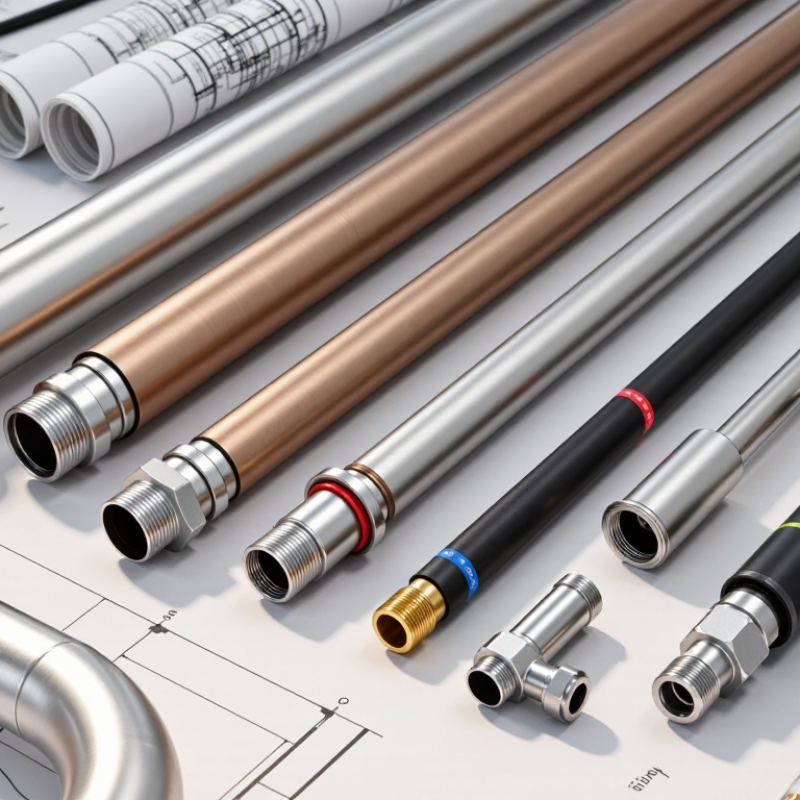
Heater pipe material directly affects heat transfer, service life, and sourcing risk. Copper provides excellent thermal conductivity and heats quickly, but it can oxidize in demanding environments. Stainless steel usually offers stronger corrosion resistance and better mechanical durability. Aluminum is lighter, yet its temperature limits and expansion rate require careful checking. No material wins every test.

Pipe size matters just as much. Compare outer diameter, wall thickness, length, and internal flow space with the heater design. A narrow pipe may heat rapidly but restrict fluid movement. A thicker wall can improve strength, although it may slow heat transfer.

Check thermal conductivity, maximum working temperature, thermal expansion, and resistance to repeated heating cycles. Ask suppliers for test reports, dimensional records, and material certificates. Confirm the same grade across samples and mass production.

Tips: Build a small comparison table before requesting quotations. Include material grade, diameter tolerance, wall thickness, conductivity, operating temperature, and packing requirements. Test samples under real heating conditions, not only room-temperature inspection. Global shipping can expose weak packaging and surface damage. I have found that a cheaper pipe sometimes creates higher installation costs. This is easy to overlook. Thermal performance also depends on contact quality, insulation, and airflow, so judging the pipe alone can be misleading.

Evaluating Safety Standards and Global Compliance Requirements

How to Choose the Right Heater Pipes for Global Sourcing

Safety compliance should guide heater pipe selection from the beginning. Define the operating voltage, fluid type, temperature range, and installation environment. A pipe for household water heating needs different protection from one used inside industrial equipment. Confirm the required insulation, grounding, leakage current, and surface temperature limits. Small design gaps can create serious hazards.

Review standards for every destination market. IEC 60335-1 may support household appliance safety evaluations, while regional rules can add testing or documentation requirements. Check electrical ratings, fire resistance, ingress protection, restricted substances, and electromagnetic compatibility where applicable. Ask suppliers for current test reports, material declarations, and traceability records. Do not accept certificates with unclear product models or expired laboratory details. Some requirements remain unclear.

Factory assessment adds practical evidence. Inspect welding areas, insulation placement, tube diameter, and resistance testing records. I have found that visual inspection alone misses inconsistent heating zones. Request sample testing under normal and abnormal conditions. Compare results with the final production version, not only an early prototype. One overlooked connector can weaken an otherwise compliant assembly. Recheck every change. Local importers, qualified laboratories, and technical authorities can confirm market-specific obligations before shipment.

How to Choose the Right Heater Pipes for Global Sourcing - Evaluating Safety Standards and Global Compliance Requirements
Heater Pipe Type Common Material Typical Applications Relevant Material or Dimensional Standards Key Selection Factors Safety and Compliance Considerations Recommended Sourcing Evidence
Straight tubular heater pipe Stainless steel 304 or 316; nickel-chromium resistance wire with magnesium oxide insulation. Ovens, air heaters, industrial heating equipment, and general-purpose electric heating assemblies. Stainless tubing may be specified to ASTM A269 or EN 10217-7, depending on the purchasing region and product design. Sheath diameter, watt density, operating temperature, insulation resistance, dielectric strength, and terminal design. Finished appliances may require evaluation under IEC 60335-1, IEC 60335-2-30, UL 499, or another applicable product standard. Material certificate, dimensional inspection report, electrical routine-test records, and documented traceability by production lot.
U-shaped tubular heater pipe Stainless steel or nickel-based alloy sheath with compacted magnesium oxide insulation. Water tanks, immersion heaters, air circulation systems, dishwashers, and commercial heating equipment. Tubing requirements can be based on ASTM A269, ASTM A213, or EN 10217-7, subject to the selected alloy and application. Bend radius, center-to-center dimensions, hot-zone length, terminal spacing, fluid compatibility, and leakage protection. Immersion designs require protection against dry operation, moisture ingress, accessible live parts, and excessive surface temperature. Pressure or leakage test results, insulation resistance test, dielectric withstand test, bend-dimension report, and material grade verification.
Fin-and-tube heater pipe Copper or stainless steel tube with aluminum or stainless-steel fins. HVAC air heaters, fan heaters, heat exchangers, air curtains, and process-air systems. Copper tube may be specified to ASTM B75 or EN 1057; fin material and coating should be specified separately. Airflow, fin density, heat-transfer area, pressure drop, corrosion exposure, and maximum sheath temperature. The complete heater must be assessed for touch temperature, fire risk, protective earthing, and abnormal-operation conditions. Thermal-performance test, airflow and pressure-drop data, fin adhesion inspection, corrosion-resistance evidence, and electrical safety reports.
Immersion heater pipe Stainless steel, copper, or nickel-based alloy selected for the heated liquid. Storage water heaters, tanks, boilers, oil heating, chemical processing, and wash systems. Use a suitable tube specification such as ASTM A269 for stainless steel or ASTM B75 for copper, with fluid-specific requirements. Liquid chemistry, chloride level, pH, scale formation, watt density, pressure rating, and compatibility with seals and terminals. The design should prevent exposed energized parts, minimize localized boiling, and include suitable over-temperature protection. Fluid-compatibility statement, corrosion test data, hydrostatic or leak test, insulation resistance, dielectric test, and temperature-limit verification.
Cartridge heater sleeve or pipe Stainless steel or Incoloy-type nickel-iron-chromium alloy sheath with ceramic or magnesium oxide insulation. Injection molds, sealing bars, packaging machinery, dies, manifolds, and compact industrial tools. Sheath material and dimensions should be specified by a recognized stainless or nickel-alloy material standard and a controlled drawing. Diameter tolerance, insertion fit, heater length, watt density, response time, lead exit construction, and thermal expansion. High watt density can create hot spots; thermal cut-outs, temperature controllers, grounding, and wiring temperature ratings are important. Resistance-value report, concentricity and diameter report, dielectric withstand test, insulation resistance test, and lead-temperature data.
Quartz or ceramic heater tube Fused quartz, alumina ceramic, or other electrically insulating high-temperature ceramic. Infrared heaters, laboratory furnaces, drying equipment, and radiant heating systems. Material requirements should identify purity, thermal-shock performance, dimensional tolerances, and the applicable ceramic specification. Radiant wavelength, thermal shock, emissivity, mechanical support, operating atmosphere, and maximum surface temperature. The assembly must address breakage, hot-surface contact, fire enclosure, UV or infrared exposure where applicable, and electrical insulation. Thermal-shock test, visual and dimensional inspection, insulation test, burn-in record, fracture-risk assessment, and temperature mapping.
Metal-sheathed circulation heater pipe Stainless steel or nickel-based alloy tube with an internal resistance element and compacted mineral insulation. Forced-air heaters, water circulation heaters, heat pumps, and industrial fluid heating skids. Stainless tube may follow ASTM A269 or EN 10217-7; pressure-containing designs require an engineering code or customer specification. Flow rate, pressure, fluid velocity, heat flux, pressure drop, corrosion allowance, and thermal expansion. Pressure boundary integrity and electrical safety must be evaluated separately; thermal cut-outs and flow interlocks are commonly required. Hydrostatic or pneumatic pressure test, weld inspection where applicable, flow-switch verification, electrical safety tests, and performance test.
Low-voltage heater pipe assembly Stainless steel or copper sheath designed for extra-low-voltage operation. Battery-powered equipment, vehicle systems, portable devices, and control cabinets. Tube material may follow ASTM A269, ASTM B75, or an equivalent regional material specification. Available voltage, current capacity, connector temperature, battery load, wire gauge, and protection against short circuits. The final equipment may also require requirements for battery safety, electromagnetic compatibility, creepage, clearance, and over-current protection. Current and resistance test, connector temperature-rise test, short-circuit protection review, EMC documentation, and operating-cycle test.
Corrosion-resistant process heater pipe Stainless steel 316L, duplex stainless steel, nickel-based alloy, or another fluid-compatible alloy. Chemical processing, food processing, pharmaceutical systems, laboratory equipment, and corrosive-liquid heating. Material selection should be supported by the applicable ASTM, EN, or ASME material specification and the purchaser's pressure-design code. Chloride concentration, pH, oxidizing conditions, crevice corrosion, weld quality, cleanliness, and pressure-temperature envelope. Pressure equipment rules may apply in addition to electrical standards; hygienic applications may require cleanable surfaces and documented material traceability. PMI or alloy verification, surface-finish report, weld procedure and inspection records, pressure test, passivation record, and full material traceability.
Flexible heating tube or cable-in-tube Silicone, fluoropolymer, fiberglass, or braided-metal outer construction with insulated resistance conductors. Pipe tracing, freeze protection, flexible vessels, medical equipment, and irregularly shaped surfaces. The insulation and cable construction should be evaluated against the relevant appliance, wiring, or flexible-heater standard for the target market. Minimum bend radius, continuous and intermittent temperature, moisture resistance, abrasion resistance, watt density, and attachment method. Installation instructions must prevent overlap, crushing, excessive bending, and operation without the specified temperature control. Bend-cycle test, moisture-resistance test, dielectric withstand, insulation resistance, temperature-rise test, and installation validation.
All heater pipe types Material and construction must be matched to the electrical, thermal, mechanical, and chemical conditions of the finished product. Global sourcing for household, commercial, industrial, laboratory, automotive, and process-heating equipment. Common compliance references include IEC 60335-1, applicable IEC 60335-2 product-part standards, UL 499 for electric heating appliances, and relevant material standards. Define rated voltage, rated power, operating temperature, abnormal conditions, lifetime, environment, ingress protection, and maintenance requirements. For EU markets, review the Low Voltage Directive 2014/35/EU where applicable, EMC Directive 2014/30/EU, RoHS Directive 2011/65/EU as amended, REACH obligations, and CE technical documentation requirements. Obtain a technical drawing, bill of materials, declarations of conformity, risk assessment, test plan, factory quality records, change-control procedure, and batch traceability.
Global sourcing note: A material or tubing standard does not by itself certify the complete heater or finished appliance. Confirm the target market, end-use product standard, voltage and frequency, pressure conditions, environmental exposure, required markings, restricted substances, and conformity-assessment route before approving production samples.

Assessing Suppliers, Quality Controls, and Production Capabilities

Choosing heater pipes for global sourcing requires more than comparing unit prices. Supplier evaluation should begin with verified experience in similar heating applications. Ask for production records, material certificates, inspection plans, and references from comparable projects. A polished factory tour can still hide weak controls. I have learned to review rejected samples and corrective-action reports, not only successful products.

Quality control should cover every critical stage. Incoming metal tubing needs checks for grade, wall thickness, and surface damage. During forming, inspectors should measure diameter and bend radius with calibrated tools. Finished pipes require electrical safety tests, leak testing, thermal cycling, and insulation checks where applicable. Request sample reports with dates, equipment numbers, and acceptance limits. Vague statements such as “fully tested” are not enough. Traceability matters.

Production capability also deserves close attention. Confirm whether the supplier controls cutting, welding, heating-element assembly, and final testing internally. Check monthly capacity against your forecast, while examining overtime risks and maintenance records. A supplier may promise 100,000 pieces, but available tooling and trained operators may support far less. I once underestimated packaging constraints; damaged ends created delays even when the pipes passed factory tests. A small pilot order can expose such weaknesses before full production. Keep specifications practical, measurable, and open to revision when testing reveals an overlooked detail.

How to Choose the Right Heater Pipes for Global Sourcing

A balanced supplier assessment should prioritize quality controls and production capability alongside commercial factors. The weighting below is a practical sourcing framework for comparing heater pipe suppliers without relying on company or brand data.

Quality systems should be supported by material certificates, dimensional inspection, leak or pressure testing, thermal-cycle validation, process traceability, and documented corrective actions. Supplier audits can reference recognized quality-management and sampling practices such as ISO 9001 and ISO 2859-1.

Calculating Total Costs, Logistics, and Long-Term Performance

Global heater pipe sourcing requires more than comparing unit prices. A reliable cost model includes material, tooling, inspection, packaging, inland transport, freight, insurance, duties, and currency changes. Request a detailed quotation with clear assumptions. A low factory price can hide expensive testing or port charges. I have seen budgets fail because packaging was treated as a minor detail.

Logistics also affects the final cost. Measure pipe length, bundle size, and loading limits before selecting a shipping route. Long pipes may require special handling or oversized transport. Moisture-resistant wrapping and strong supports can prevent damaged edges, although they add a small charge.

Confirm production lead times, documentation, and delivery terms in writing. Delays still happen. Leave a practical contingency for rework, inspection, and customs-related storage.

Long-term performance should guide the purchase. Compare thermal conductivity, operating temperature, corrosion resistance, pressure tolerance, weld quality, and expected service life. Ask for test records, traceable material certificates, and production samples. A sample should face realistic heating cycles, not only visual inspection. Energy loss and replacement labor belong in the lifecycle calculation. Cheap pipes can become expensive after repeated shutdowns. My own estimates are never perfect; field conditions, installation quality, and maintenance habits can change the result. Recheck the model after receiving the first shipment.