Leave Your Message
Choosing Heating Air Systems in 2026 requires more than comparing purchase prices and advertised efficiency ratings. A system should match the building, climate, budget, and household routines. In practice, a poorly sized unit can cycle too often, create uneven temperatures, and waste energy. An oversized heat pump may feel powerful, yet it can struggle with humidity control. A smaller, correctly calculated system often performs better. That detail is easy to miss.
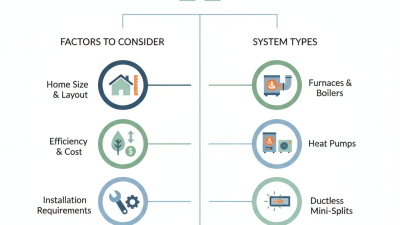
This guide introduces practical ways to compare heat pumps, furnaces, ducted systems, and ductless options. It considers efficiency ratings, installation quality, filtration, noise, controls, maintenance, and expected service life. Regional conditions matter, too. A cold-climate heat pump may need strong low-temperature performance, while a mild coastal home may prioritize dehumidification. Look for verified performance data, recognized certifications, clear warranty terms, and qualified local installation. Manufacturer specifications provide useful evidence, but they do not replace an on-site load calculation. Building insulation, window exposure, duct leakage, and electrical capacity can change the recommendation. Local codes and refrigerant requirements also deserve attention in 2026.
Experience shows that the cheapest quote is not always the lowest-cost choice. However, premium equipment is not automatically better. Homeowners should question vague savings claims and request written estimates. Ask how efficiency was measured. Ask who will service the system. A trusted HVAC professional can explain trade-offs without forcing one brand or design. Even careful guidance has limits, because every property behaves differently. Use this article as a decision framework, then verify the final choice with qualified professionals and reliable documentation.
How to Choose Heating Air Systems in 2026?
Choosing a heating air system starts with understanding how each system moves heat. A forced-air furnace heats air through combustion or electric elements, then sends it through ducts. It responds quickly and can support central cooling. However, dusty filters, dry rooms, and uneven temperatures may appear when ducts leak or airflow is poorly balanced. During practical inspections, a bedroom at the end of a duct run often feels colder than the living room.
Air-source heat pumps transfer heat instead of creating it directly. They can heat and cool through one system, saving space and potentially reducing energy use in mild climates. Cold-climate models still operate in low temperatures, but their output decreases as outdoor air becomes colder. A backup heater may run during severe weather. Ground-source systems use stable underground temperatures, yet they require more land and installation work. Not every property suits them.
Boilers heat water for radiators, baseboards, or underfloor tubing. Radiant heat feels steady because floors and surfaces warm gradually. It does not provide fresh ventilation by itself. Electric resistance heaters are simple and clean at the point of use, but operating costs can rise in cold regions. Check insulation, local design temperatures, noise, service access, and certified load calculations. I would not trust a system sized only by floor area. That shortcut is common and sometimes wrong. Leave room for doubt.
| Heating System Type | Primary Energy Source | Typical Efficiency Metric | Typical Planning Range | Heat Distribution | Cooling Capability | Best Climate or Application | Main Advantages | Key Limitations |
|---|---|---|---|---|---|---|---|---|
| Air-Source Heat Pump | Electricity; transfers heat between outdoor air and indoor air | Seasonal coefficient of performance (SCOP) or HSPF2; heating COP varies with outdoor temperature | Approx. seasonal COP 2.5–4.0 in suitable installations; performance declines during very cold conditions | Ducted forced air or hydronic distribution through a compatible indoor unit | Yes; normally provides heating, cooling, and dehumidification | Moderate to cold climates, especially when properly sized for local design temperatures | High operating efficiency; one system can provide heating and cooling; no on-site combustion | May require backup heat in extreme cold; outdoor unit needs adequate airflow and periodic defrosting |
| Ductless Mini-Split Heat Pump | Electricity; air-to-air heat transfer without central ductwork | SEER2 for cooling and HSPF2 or SCOP for heating | Approx. seasonal COP 2.5–4.5, depending on climate, equipment, and operating temperatures | Indoor wall, ceiling, or floor-mounted air handlers | Yes; individual indoor units can provide room-by-room control | Homes without ducts, additions, renovated spaces, and buildings needing zoning | Efficient zoning; limited structural work; avoids duct losses; independent temperature control | Visible indoor units; multiple rooms may need multiple heads; airflow and filtration differ from central systems |
| Gas or Propane Forced-Air Furnace | Natural gas or propane combustion | Annual Fuel Utilization Efficiency (AFUE) | Approx. 80%–98.5% AFUE, depending on design and installation | Central ducted forced air | No; a separate cooling system is normally required | Cold climates with existing gas service and ductwork | Fast warm-up; strong performance in cold weather; familiar technology; compatible with central air conditioning | Combustion emissions; requires venting and fuel infrastructure; duct leakage can reduce delivered efficiency |
| Electric Resistance Furnace or Air Handler | Electricity converted directly into heat | Heating element conversion efficiency; approximately 100% at the point of use | Approximately 100% site efficiency, excluding distribution losses; operating cost depends strongly on electricity rates | Central ducted forced air | No; cooling requires a separate air-conditioning system | Mild climates, small spaces, supplemental heat, or locations without gas service | Simple equipment; low installation complexity; no combustion or flue; limited maintenance | Usually higher energy use than a heat pump for the same heat output; may require substantial electrical capacity |
| Hydronic Boiler with Radiators or Baseboards | Natural gas, propane, oil, electricity, or a heat-pump-based hot-water system | AFUE for combustion boilers; seasonal efficiency for electric or heat-pump systems | Approx. 80%–95% AFUE for common combustion designs; heat-pump hydronic systems vary by operating temperature | Hot-water radiators, baseboards, or in-floor tubing | No; separate cooling distribution is generally needed | Cold climates and homes that already have radiators or radiant floors | Quiet operation; even radiant comfort; avoids blowing dust through rooms; supports room-by-room zoning | Slower temperature response; pipes and radiators require space; installation can be disruptive in homes without hydronic infrastructure |
| Electric Radiant Floor or Panel Heating | Electricity; resistance cables, mats, or panels | Point-of-use resistance efficiency; approximately 100% at the heating element | Approximately 100% site efficiency, excluding controls and distribution considerations | Radiant heat from floors, walls, ceilings, or panels | No; a separate cooling system is required | Bathrooms, small rooms, additions, and supplemental comfort zones | Silent operation; excellent local comfort; no moving parts in many installations; no ductwork | Can be costly for whole-home heating; floor or wall access may be required; slow response in high-mass floors |
| Ground-Source Heat Pump | Electricity; exchanges heat with the ground through buried loops or wells | Seasonal COP, EER, and ground-loop performance | Often approximately seasonal COP 3.0–5.0 when correctly designed; actual performance depends on ground conditions and water temperatures | Ducted air, fan coils, or compatible hydronic distribution | Yes; reversing operation can provide cooling | Long-term ownership, suitable land or drilling access, and regions with high heating or cooling loads | Stable source temperature; high seasonal efficiency; low outdoor noise; reduced exposure to air-temperature swings | Higher upfront installation cost; requires site assessment, permitting, and adequate ground-loop space or drilling access |