Choosing a reliable Heat Preservation Cover supplier requires more than comparing prices or browsing polished product pages. Performance depends on fabric quality, insulation density, stitching, fastening systems, and the cover’s fit around real equipment. This guide introduces ten leading suppliers worldwide and examines how they approach these practical demands.
The comparison considers thermal efficiency, temperature resistance, custom manufacturing, delivery capability, and quality control. It also looks at experience in industrial piping, valves, molds, tanks, and process machinery. A strong supplier should provide clear material information, usable installation guidance, and consistent communication after purchase. Details matter.
Where available, supplier claims should be checked against test reports, certifications, customer feedback, and documented production practices. A cover that performs well in a clean factory may struggle with moisture, repeated removal, or limited workspace. That difference is easy to overlook. It should not be.
This overview aims to support purchasing teams, engineers, and facility managers with practical, balanced information. It does not treat brand reputation as proof of every technical claim. Some rankings may change as product ranges, regional service, and manufacturing standards develop. That is worth remembering.
Readers should compare suppliers against their own operating temperatures, equipment shapes, safety procedures, and maintenance schedules. The best choice is rarely universal. It is the solution that delivers dependable heat retention, safe handling, reasonable service life, and measurable value in its intended environment.
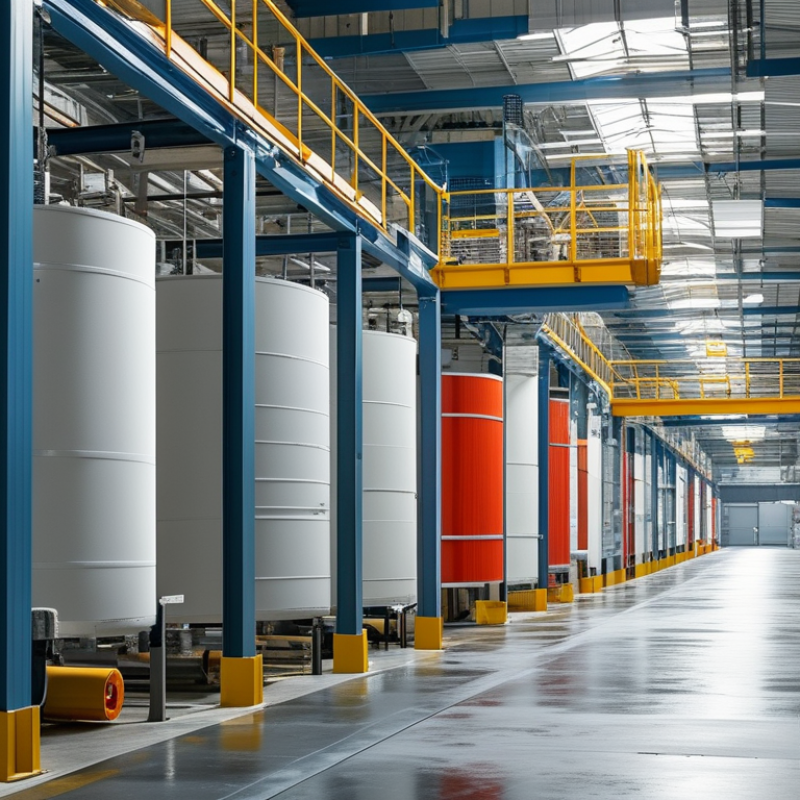
Heat preservation covers are insulated textile barriers designed to slow heat loss or heat gain.
They usually combine woven fabric, reflective film, and thermal insulation layers. Some include reinforced edges, straps, or fitted openings for easier installation. The cover does not create heat. It reduces energy transfer around equipment, containers, pipes, and exposed surfaces.
In industrial facilities, these covers protect tanks, valves, pumps, and process lines from temperature fluctuation. Food processors use them around storage vessels and transport containers. Construction teams may cover curing materials, temporary tanks, or heated tools during cold weather. In laboratories, removable covers can help stabilize test conditions.
Fit matters greatly. A loose cover can leave gaps, collect moisture, or shift during handling.
The key benefits include lower heat loss, steadier operating temperatures, and reduced surface contact with hot equipment. Workers may also face fewer burn risks when covers are correctly fitted and clearly marked.
However, performance depends on insulation thickness, surface temperature, humidity, and installation quality. I have seen a well-made cover perform poorly because its fasteners were neglected. That detail is easy to miss.
Reliable suppliers should provide material data, temperature limits, cleaning instructions, and test evidence. Buyers should check stitching, fire behavior, chemical resistance, and replacement-part availability.
Independent inspection can add confidence when covers serve critical processes. Cheaper options may look similar, but their insulation can compress quickly. This is where careful comparison matters.
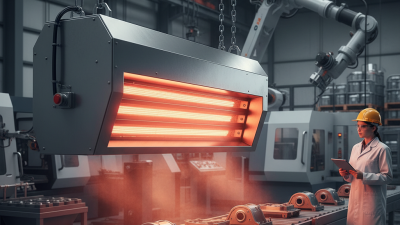
Evaluating heat preservation cover suppliers worldwide requires more than comparing catalog prices. The first test is thermal evidence. Ask for measured thermal conductivity, service temperature, thickness, heat-loss method, and testing laboratory. A cover rated for 1,000°C may perform poorly at seams or after repeated folding. Request samples tested at your actual operating temperature. Small details matter.
The IEA’s Buildings 2023 report states that buildings consume about 30% of global final energy and create approximately 26% of energy-related emissions. Industrial covers are different, but the message remains relevant: verified thermal control has measurable value. The UNEP/GlobalABC 2023 report also identifies buildings and construction as responsible for 32% of global energy use. Evaluate insulation materials, surface temperature, fire-test evidence, moisture resistance, and sewing quality. Do not trust glossy charts. ISO 9001 certification supports process control, but it does not prove a cover’s field performance.
Supplier reliability needs practical checks. Review production capacity, lot inspection records, traceability, custom dimensions, fastening systems, replacement parts, and delivery history. Ask how performance changes after 100 folding cycles. That test is often missing. A supplier should explain failure limits clearly, not promise perfect durability. Compare at least three samples under identical conditions, using the same pipe diameter, exposure time, and measurement method. I would still keep a small performance margin, because workshop conditions are rarely as clean as laboratory conditions.
Top 10 Heat Preservation Cover Suppliers Worldwide
A practical global shortlist should compare specialties, not only sales volume. The leading ten supplier groups typically serve different thermal needs: removable insulation blankets for valves and flanges, high-temperature ceramic covers, cryogenic jackets, tank and pipe insulation, fire-resistant curtains, food-grade covers, outdoor weatherproof systems, aerospace components, reusable rental covers, and custom industrial enclosures. This specialization matters because operating temperatures can range from below -150°C to above 1,000°C. A standard blanket will not perform safely across that span.
The International Energy Agency reported in Energy Efficiency 2023 that buildings represent about 30% of global energy demand. Industrial heat losses add another costly layer, especially around exposed valves, pumps, and access points. The U.S. Department of Energy also identifies insulation as a practical way to reduce heat transfer and operating costs. However, supplier claims need testing. Look for thermal conductivity data, maximum service temperature, material composition, seam strength, and documented results under real site conditions. ISO 8301 testing can support credibility, but laboratory performance may not match wet, dusty, or vibrating equipment. That gap deserves more attention.
Tips: Measure every component before ordering. Request a removable design with labeled sections. Check whether the fabric resists moisture, chemicals, and repeated washing. A lower purchase price may create higher maintenance costs. Pilot one cover first; it may reveal an overlooked fit problem.
Top 10 Heat Preservation Cover Suppliers Worldwide
When comparing the top ten heat preservation cover suppliers worldwide, examine material data before catalog claims. Fiberglass fabric is economical and flexible, while silicone-coated cloth improves surface durability. Aerogel blankets can provide very low thermal conductivity, often near 0.015 W/m·K under laboratory conditions. ASHRAE Handbook—Fundamentals notes that installed performance changes with thickness, compression, moisture, and air movement. A low conductivity number can still disappoint.
Thermal performance should be verified through recognized testing. ASTM C177 measures steady-state heat flux under controlled conditions, while ISO 8301 supports similar guarded-heater evaluation. The U.S. Department of Energy’s Industrial Decarbonization Roadmap identifies insulation upgrades as practical energy-efficiency measures for industrial facilities. Suppliers should provide test temperatures, thickness, density, and seam details. Without those details, comparisons become unreliable. In field inspections, gaps around valves and flanges frequently reduce real protection.
Tips: Ask for a sample cover first. Measure surface temperature, fit, and installation time. Choose removable designs for maintenance access, stainless-steel lacing for harsh sites, and moisture-resistant outer layers for outdoor equipment. Customization may include irregular shapes, viewing windows, labels, fire-resistant fabrics, and multi-layer construction. Keep the specification realistic. Overdesigned covers add weight, cost, and sometimes awkward handling. One weakness remains easy to miss: laboratory results rarely represent damaged stitching, repeated removal, or wet insulation. Review those risks before selecting a supplier.
Comparative supplier profiles based on commonly available industrial heat-preservation cover specifications. Supplier names are intentionally omitted.
| Rank | Supplier Profile | Primary Market Region | Typical Cover Type | Core Materials | Typical Thickness | Thermal Conductivity | Maximum Service Temperature | Thermal Performance | Customization Options | Typical Applications |
|---|---|---|---|---|---|---|---|---|---|---|
| 1 | Supplier Profile A | Western Europe | Removable insulated blankets and valve covers | Silica aerogel composite, fiberglass cloth, stainless-steel thread | 10–25 mm | 0.015–0.025 W/m·K at room temperature | Up to 650°C, depending on outer fabric | High insulation efficiency with limited thickness; commonly used where access is required | 3D CAD patterns, inspection windows, hook-and-loop or buckle closures, identification labels | Steam valves, flanges, pumps, hot piping and process equipment |
| 2 | Supplier Profile B | North America | Reusable industrial insulation blankets | Fiberglass needled mat, silicone-coated fiberglass fabric | 25–50 mm | 0.035–0.045 W/m·K at 20°C | Up to 540°C continuous exposure | Good heat-loss reduction and personnel-contact temperature control | Custom thickness, reinforced corners, drain cut-outs, color coding and serialized tags | Piping, turbines, exhaust systems, heat exchangers and process vessels |
| 3 | Supplier Profile C | East Asia | High-temperature ceramic-fiber covers | Aluminosilicate ceramic fiber, refractory cloth, metal fasteners | 20–75 mm | 0.08–0.12 W/m·K at 500°C | Up to 1,000°C continuous use; higher short-term ratings may be available | Suitable for high-temperature heat retention and radiant-heat reduction | Multi-layer construction, ceramic-paper liners, lifting straps and custom openings | Furnaces, kilns, hot-air ducts, burners and thermal-treatment equipment |
| 4 | Supplier Profile D | Northern Europe | Removable covers for valves, flanges and instruments | Mineral wool, fiberglass textile, water-resistant outer coating | 30–60 mm | 0.035–0.045 W/m·K at 20°C | Up to 500°C continuous exposure | Balanced insulation, mechanical durability and moisture resistance | Marine-grade fabric, stainless buckles, drainage features, color coding and removable panels | Chemical plants, marine systems, district heating and utility infrastructure |
| 5 | Supplier Profile E | Southeast Asia | Flexible pipe and tank insulation jackets | Fiberglass or mineral-wool insulation, PVC-coated fiberglass fabric | 25–100 mm | 0.035–0.050 W/m·K at 20°C | Typically 260–550°C, based on facing material | Effective insulation for large surfaces and moderate-to-high temperature systems | Large-diameter patterns, access doors, rain hoods, logo-free labels and modular sections | Storage tanks, reactors, large pipework, hot-water systems and boilers |
| 6 | Supplier Profile F | Central Europe | Insulation jackets for thermal-oil and steam systems | Needled fiberglass, PTFE-coated fabric, stainless-steel lacing | 20–50 mm | 0.035–0.045 W/m·K at 20°C | Up to 600°C continuous exposure | Low-maintenance, reusable insulation with strong resistance to oils and industrial contaminants | PTFE outer layers, chemical-resistant seams, inspection ports and engraved metal tags | Thermal-oil lines, steam traps, pumps, compressors and energy plants |
| 7 | Supplier Profile G | Middle East | Outdoor removable insulation covers | Mineral wool, silicone-coated fiberglass, UV-resistant thread | 40–100 mm | 0.035–0.050 W/m·K at 20°C | Up to 550°C continuous exposure | Designed to reduce heat loss in high-ambient-temperature environments | UV-resistant fabrics, sealed seams, wind-resistant straps, rain protection and salt-air options | Refineries, petrochemical facilities, outdoor piping and desalination plants |
| 8 | Supplier Profile H | East Asia | Compact aerogel pipe and equipment covers | Aerogel blanket, fiberglass facing, high-temperature stitching | 6–20 mm | 0.013–0.025 W/m·K, depending on temperature | Approximately 650°C for selected constructions | Very high insulation value where clearance and weight are restricted | Ultra-thin patterns, split designs, integrated labels, cut-outs and multi-layer assemblies | Offshore modules, compact machinery, LNG-related equipment and congested pipe racks |
| 9 | Supplier Profile I | South Asia | Standardized removable covers and blanket panels | Fiberglass mat, aluminum-coated fiberglass fabric, textile fasteners | 25–75 mm | 0.035–0.050 W/m·K at 20°C | Up to 500°C continuous exposure | Cost-effective heat retention for repeatable equipment geometries | Standard sizes, custom sewing, reinforced handles, access flaps and batch identification | Commercial boilers, hot-water tanks, pumps, valves and industrial utilities |
| 10 | Supplier Profile J | Oceania | Marine and food-process equipment insulation covers | Fiberglass or mineral wool, washable coated fabric, stainless fittings | 20–60 mm | 0.035–0.050 W/m·K at 20°C | Typically 260–500°C, depending on fabric selection | Good thermal retention with emphasis on cleanability and corrosion resistance | Washable covers, hygienic seams, stainless hardware, removable panels and moisture barriers | Marine engines, food-processing lines, hot-water systems and coastal facilities |
Top 10 Heat Preservation Cover Suppliers Worldwide
Pricing varies sharply by fabric, insulation thickness, temperature rating, and order volume. Practical industrial quotations often range from US$40 to US$180 per square meter for standard covers. Custom high-temperature designs can exceed US$500 per square meter. These figures are indicative, not fixed market prices. The International Energy Agency reports that industrial efficiency remains a major energy-saving opportunity, making lifecycle cost more important than the lowest purchase price. Ask suppliers to show heat-loss testing, replacement intervals, and installation labor.
Certification needs careful checking. ISO 9001 supports process consistency, but it does not prove thermal performance. Request test results based on ASTM C177, ASTM C518, or ISO 8301 where applicable. Fire-risk projects may require EN 13501-1 classification or equivalent local testing. Material traceability also matters. A certificate without a matching batch number is weak evidence. Environmental declarations can support procurement goals, although they should not replace technical verification.
Tips: Compare delivered cost, not factory price. Confirm Incoterms, export packing, customs documents, and warranty coverage. The World Bank’s 2023 Logistics Performance Index shows meaningful differences in border reliability and delivery performance worldwide. Build schedule protection into contracts. I would also request one physical sample before approving ten suppliers. It adds time. It can prevent an expensive mistake. Supplier rankings are useful, but they should not replace site measurements, temperature mapping, or a documented acceptance test.
This chart presents an indicative buyer-weighting model for evaluating heat preservation cover suppliers internationally. Product performance, total landed cost, certification readiness, customization capability, and delivery reliability are commonly assessed together. Certification requirements may vary by destination market, product application, and material composition; typical references include ISO 9001, ISO 14001, ISO 45001, CE, RoHS, and REACH-related documentation.