Leave Your Message

Top Cast Aluminum Heater Manufacturers in China

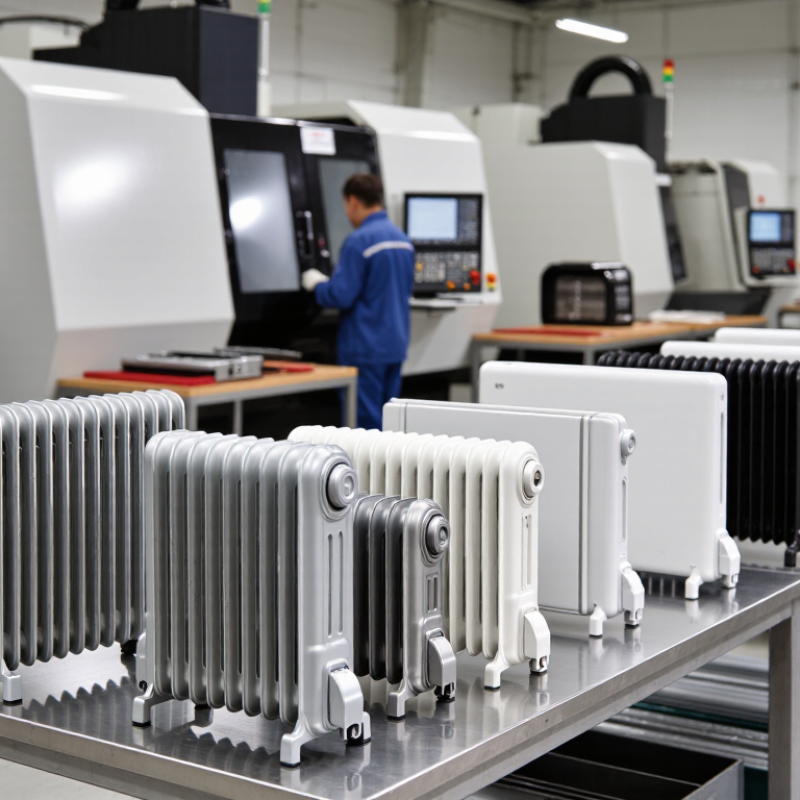
China has become an important production base for heating equipment, including cast aluminum radiators and electric heating systems. The country offers broad manufacturing capacity, competitive engineering resources, and experienced metalworking teams. A reliable Cast Aluminum Heater manufacturer should provide more than attractive pricing. It should demonstrate stable casting quality, accurate machining, safe electrical design, and consistent production control.

This guide examines leading Chinese manufacturers through practical evaluation criteria. These include factory experience, product range, material selection, heating efficiency, surface treatment, and quality inspection. We also consider customization support, communication, packaging, and after-sales service. Details matter. A smooth powder-coated surface, clean thread, and properly sealed connection can reveal much about production discipline. Testing records and clear technical documents also help buyers reduce uncertainty.

No ranking is perfect. Manufacturer information can change, and factory capability may differ between product lines. That deserves attention. Buyers should verify certifications, request recent samples, and review inspection procedures before placing large orders. Factory visits or independent audits may provide stronger evidence than polished brochures. Product performance also depends on installation, voltage, room size, and operating conditions. Therefore, a supplier suitable for one project may not fit another.

The following overview presents established Cast Aluminum Heater manufacturers in China and explains their practical strengths. It is designed for importers, distributors, contractors, and project buyers seeking dependable long-term partners. The goal is not to promote the loudest brand. It is to support careful comparison, realistic expectations, and better purchasing decisions.

Top Cast Aluminum Heater Manufacturers in China

Cast Aluminum Heaters: Definition, Structure, and Operating Principles

Cast Aluminum Heaters: Definition, Structure, and Operating Principles

Cast aluminum heaters are electric resistance heaters built around a cast aluminum body. The body usually contains an insulated resistance element, mounting channels, wiring terminals, and a protective surface coating. Aluminum spreads heat quickly because its thermal conductivity is high, although actual cast alloys perform below pure aluminum. This detail is often overlooked.

When current passes through the resistance element, electrical energy becomes heat. The aluminum body absorbs and distributes that heat across its fins or enclosed panels. Heat then reaches the room through convection and infrared radiation. The U.S. Department of Energy describes electric resistance heating as nearly 100% efficient at the point of use. However, generation losses and electricity prices still affect real operating costs.

The structure matters during manufacturing and inspection. Uniform wall thickness reduces hot spots, while stable casting quality limits cracking and distortion. Temperature sensors and thermostatic controls prevent unnecessary cycling. The International Energy Agency reports that buildings consume about 30% of global final energy, making control accuracy increasingly important. The U.S. Energy Information Administration’s 2020 Residential Energy Consumption Survey also found space heating represented 42% of household energy use. A warmer surface is not automatically a better heater. Engineers should test heat distribution, insulation resistance, surface temperature, and long-term corrosion behavior. A tidy calculation can still mislead when room insulation is poor. Real installations remain imperfect.

Key Manufacturing Regions and Industry Development in China

Top Cast Aluminum Heater Manufacturers in China

China’s cast aluminum heater industry is shaped by several practical manufacturing regions. Zhejiang has dense metalworking networks and experienced export suppliers. Factories there often combine casting, machining, surface treatment, and assembly in one production chain.

Guangdong benefits from mature electronics and appliance supply chains. This supports heaters with digital controls, sensors, and compact housings.

Jiangsu provides strong engineering capacity, automated equipment, and access to industrial testing services.

Shandong also contributes through aluminum casting, tooling, and large-scale component production. The picture is not perfectly uniform.

Regional strengths are increasingly connected through specialized subcontractors. Many producers now use automated die-casting machines and computer-controlled machining centers. Process control can reduce wall-thickness variation and improve heat transfer. Yet digital adoption differs widely between factories. Some smaller workshops still rely heavily on manual inspection, which can create uneven results.

For buyers, regional selection should include a factory-level assessment. An audit should review mold maintenance, alloy composition, coating adhesion, and electrical safety procedures. Ask for batch records and traceable test samples. Samples should undergo thermal cycling, surface checks, and leakage testing where applicable. Heat distribution matters.

Supplier records may reveal more than polished showrooms. One weakness remains: production data is not always presented consistently. Careful buyers should compare test methods, not only test numbers. This approach supports clearer decisions when evaluating China’s leading cast aluminum heater manufacturing regions.

How to Evaluate China’s Top Cast Aluminum Heater Manufacturers

Evaluating China’s top cast aluminum heater manufacturers requires more than comparing catalog prices. Start with production evidence: years in casting, monthly capacity, alloy specifications, and melting temperature control. Ask for a sample heater and inspect its rib thickness, surface finish, mounting holes, and weight consistency. Small defects matter. A rough edge may reveal weak finishing control, while uneven ribs can affect heat distribution. Request photos or videos from the actual workshop, not polished product images.

Technical confidence comes from measurable testing. A reliable supplier should explain pressure testing, coating adhesion checks, electrical safety controls, and thermal performance tests. Ask for records linked to batch numbers. Confirm whether key processes are handled in-house or outsourced. Outsourcing is not automatically a weakness, but unclear responsibility is. Review material certificates, inspection plans, and traceability documents with an engineer. If answers remain vague, pause the order. I have seen attractive samples fail when production tolerances changed.

Communication also deserves practical testing. Send a detailed drawing and request a written quotation, tolerance notes, packaging methods, and delivery schedules. Compare how carefully the team responds. The cheapest offer may become expensive after rework, damaged cartons, or delayed approvals. Visit the facility when possible, or use an independent inspection before shipment. Leave room for doubt. A manufacturer can look capable and still need closer verification.

How to Evaluate China’s Top Cast Aluminum Heater Manufacturers

This chart presents a practical, non-brand evaluation framework for cast aluminum heater manufacturers. Product quality, thermal performance, and safety compliance receive the highest weights because they directly affect heating reliability, operating safety, and long-term service life. The weighting can be adjusted according to project requirements.

Product Standards, Customization, and Quality Control Requirements

Top Cast Aluminum Heater Manufacturers in China

Reliable cast aluminum heater manufacturers should treat standards as working controls, not paperwork. Production teams usually verify alloy composition, casting temperature, and mold stability before full-scale manufacturing. A heater may look smooth while hiding porosity inside. That defect can reduce heat transfer or weaken electrical insulation. Applicable IEC safety requirements, local certification rules, and customer specifications must be reviewed for the target market. ISO 9001-based procedures can support traceability, but certificates alone do not prove product quality.

Customization often includes voltage, wattage, heating zones, mounting holes, cable exits, and surface coatings. Engineers should confirm heat distribution through drawings, thermal simulation, and prototype testing. Small changes matter. A two-millimeter hole shift can delay assembly. Manufacturers should provide dimensional tolerances before tooling begins. They should also record aluminum grades, heating wire resistance, insulation materials, and coating thickness. Clear records make later adjustments faster and safer.

Quality control should cover incoming materials, casting inspection, machining, electrical testing, and final packaging. Useful tests include resistance measurement, high-voltage insulation testing, grounding checks, thermal cycling, and visual inspection under consistent lighting. Sample testing is helpful, but full testing may be necessary for critical electrical parameters. One weakness deserves attention: inspection plans are sometimes copied from older projects. They should be reconsidered when the heater shape or operating temperature changes. Photographs, batch numbers, and test data improve accountability during production and after delivery.

Top Cast Aluminum Heater Manufacturers in China - Product Standards, Customization, and Quality Control Requirements
Evaluation Dimension Key Requirement Typical Technical Benchmark Recommended Quality-Control Evidence
Product Scope Cast aluminum heaters should be selected according to the heating method and end-use environment. Band heaters Plate heaters Immersion heaters Air heaters Die-cast heater assemblies Approved product drawings, application review, operating-temperature confirmation, and documented product specifications.
Aluminum Alloy The alloy must provide adequate thermal conductivity, castability, mechanical strength, and corrosion resistance for the intended application. Common casting alloys include aluminum-silicon families such as A356/AlSi7Mg and ADC12/AlSi12Cu-type materials. The exact grade should be stated on the drawing or purchase specification. Material certificates, chemical-composition analysis, supplier traceability, and incoming material inspection.
Casting Standard The casting process and acceptance criteria should be defined before production. ASTM B26/B26M applies to aluminum-alloy sand castings, while ASTM B85/B85M applies to aluminum-alloy die castings. Equivalent national or international standards may be specified by contract. Process specification, mold or die approval, casting inspection plan, dimensional reports, and defect classification criteria.
Heating Element The embedded heating element must provide stable resistance, insulation, and heat transfer without damaging the casting. Typical constructions use resistance wire or cartridge-heater assemblies embedded, pressed, or mechanically fixed into the aluminum body. Rated voltage, wattage, resistance tolerance, and allowable surface temperature must be documented. Resistance test, wattage test, insulation-resistance test, dielectric-strength test, and heating-uniformity test.
Electrical Safety Electrical protection must match the product category, operating voltage, installation method, and target market. IEC 60335-1 is commonly relevant to household and similar electrical appliances. Industrial heating equipment may require evaluation under IEC 60519-1 and applicable product-specific requirements. Electrical safety test records, protective-earth continuity results, dielectric withstand results, leakage-current results, and approved wiring diagrams.
Ingress Protection The enclosure and terminal area should be protected against solids, water, dust, or moisture according to the installation environment. Ingress protection ratings should be specified and tested in accordance with IEC 60529. The required rating depends on whether the heater is installed indoors, outdoors, in a washdown area, or inside machinery. IP test report, enclosure inspection, gasket inspection, terminal-cover inspection, and visual review of cable-entry protection.
Thermal Performance The heater should achieve the required heating rate and maintain temperature uniformity without excessive hot spots. Performance should be defined by rated power, operating voltage, target temperature, warm-up time, heat-output distribution, and maximum allowable temperature deviation. Thermocouple mapping, infrared-temperature survey, warm-up curve, steady-state test, and test report linked to a serial or batch number.
Dimensional Accuracy Critical mounting, sealing, electrical, and mating dimensions must comply with the approved drawing. Typical controls include datum-based inspection, tolerance requirements for mounting holes and locating features, flatness limits for contact surfaces, and defined tolerances for wall thickness. Coordinate-measuring-machine report, calibrated gauges, first-article inspection, and production sampling records.
Casting Defects Defects that can reduce thermal performance, strength, insulation, or sealing integrity must be controlled. The acceptance specification should address porosity, cold shuts, inclusions, cracks, shrinkage, flash, surface pits, and leakage paths. Repair welding or filler repair should require written approval. Visual inspection, dye-penetrant testing where appropriate, X-ray or computed-tomography inspection for critical parts, and documented nonconformance records.
Surface Treatment The finish should support corrosion resistance, release performance, electrical insulation, appearance, or cleanability as required. Available treatments may include machining, shot blasting, anodizing, powder coating, chemical conversion coating, or high-temperature protective coating. Coating temperature limits must be compatible with heater operation. Surface-finish sample approval, coating-thickness measurement, adhesion test, color or appearance inspection, and corrosion testing when specified.
Customization Customization should be controlled through an approved technical package rather than informal changes. Custom variables may include dimensions, wattage, voltage, hole layout, terminal position, sensor ports, thermocouple locations, insulation, surface treatment, connector type, and control-interface requirements. Signed drawing, bill of materials, revision history, engineering-change notice, prototype approval, and customer-specific inspection plan.
Temperature Control The heater should be compatible with the specified sensor, controller, thermostat, or over-temperature protection device. The design should identify sensor type, sensor location, control range, control tolerance, maximum operating temperature, and independent over-temperature protection where required. Sensor continuity check, controller compatibility test, temperature-cycle test, over-temperature trip test, and calibration records.
Insulation System Electrical insulation must remain stable throughout the rated operating temperature and service life. Insulation materials should be selected according to voltage, temperature, moisture exposure, creepage, clearance, and mechanical stress. Ceramic, mica, mineral, fiberglass, and high-temperature polymer components may be used according to design requirements. Insulation-resistance test at specified voltage, dielectric-strength test, thermal aging evaluation, and insulation-material certificates.
Energy Efficiency The heater should transfer heat effectively while minimizing heat loss to surrounding components and the environment. Relevant design measures include optimized casting contact, controlled wall thickness, thermal insulation, suitable watt density, accurate temperature sensing, and automatic power control. Power-consumption measurement, heat-loss assessment, warm-up comparison, steady-state efficiency evaluation, and thermal-image documentation.
Environmental Compliance Materials and components should meet the regulatory requirements of the destination market. RoHS requirements under Directive 2011/65/EU, as amended, may apply to electrical and electronic equipment. REACH substance declarations may also be requested for the supply chain. RoHS test report or declaration, REACH declaration, restricted-substance material statements, and supplier compliance records.
Factory Quality System The manufacturing site should operate a documented quality-management system with controlled procedures. ISO 9001 provides a widely recognized framework for quality-management systems. Certification scope should cover the relevant casting, machining, heating-element assembly, and testing activities. Valid certificate, audit report, process-control plan, corrective-action records, calibration system, and internal-audit documentation.
Traceability Materials, production parameters, inspection results, and shipment records should be traceable to a defined batch or serial number. Traceability should normally cover alloy batch, heating-element batch, casting date, operator or workstation, test results, inspection status, and final packaging. Lot codes, production travelers, barcode or serial-number records, material certificates, final inspection reports, and retention policy.
Reliability Testing The finished heater should withstand expected thermal, electrical, mechanical, and environmental stresses. Typical tests include thermal cycling, power cycling, high-temperature operation, vibration where applicable, moisture exposure, terminal strength, and repeated start-stop operation. Validation protocol, sample-size definition, test duration, failure criteria, life-test results, and corrective-action documentation.
Packaging and Shipping Packaging must protect machined surfaces, terminals, connectors, coatings, and fragile heating components during transport. Packaging should include corrosion protection where needed, terminal protection, shock and vibration control, moisture protection, product identification, and handling instructions. Packaging specification, drop or transport test when required, shipment inspection, label verification, and photographic packing records.
Documentation Package Technical and quality documents should be supplied according to the contract and destination-market requirements. A standard package may include approved drawings, datasheets, wiring diagrams, operating instructions, material certificates, inspection reports, test reports, compliance declarations, and certificates of conformity. Document-control register, revision-controlled files, certificate validity review, and document completeness checklist.
Note: Applicable standards, test methods, tolerances, and certification requirements should be confirmed against the heater’s voltage, temperature, installation environment, intended use, and destination market before production approval.

Applications, Pricing Factors, and Export Considerations for Buyers

Top Cast Aluminum Heater Manufacturers in China

Cast aluminum heaters serve packaging machines, sealing bars, molds, ovens, and fluid-processing equipment. Their strong heat transfer supports stable temperatures in demanding production environments. Buyers should examine machining accuracy, insulation quality, wattage tolerance, and testing records. A capable manufacturer can provide drawings, thermal data, sample testing, and traceable inspection documents. Factory experience matters more than polished product photos. That lesson is easy to overlook.

Pricing usually depends on alloy grade, heater shape, power density, quantity, machining, and control-sensor options. Custom tooling can raise initial costs, while repeated orders often reduce the unit price. Request a detailed quotation with tooling, packaging, testing, and delivery charges listed separately. For exports, confirm voltage, frequency, labeling, pallet strength, and moisture protection. Ask whether the supplier regularly prepares commercial invoices, packing lists, certificates, and other destination-market documents. Delivery estimates can still change during peak production periods. Plan a buffer.

Tips: Send complete drawings and operating temperatures. Define tolerances before sampling. Test one sample under real working conditions. Compare landed cost, not factory price alone. Check communication speed and corrective-action records. A cheaper heater may create uneven heating, downtime, or expensive replacement work later. Also, revisit your specifications after testing; the first design is not always the best one.