Why Choose the Right Heating Air Systems for Your Needs?
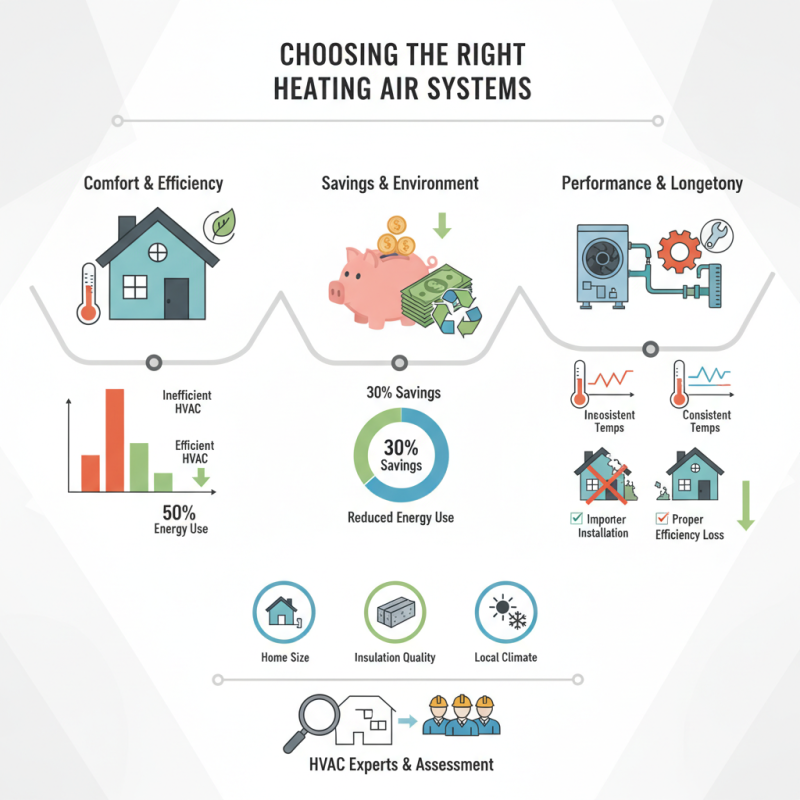
Choosing the right Heating Air Systems is crucial for both comfort and energy efficiency. According to the Department of Energy, inefficient HVAC systems can account for nearly 50% of a home's energy consumption. Selecting the appropriate system can lead to substantial savings on energy bills. In fact, opting for a high-efficiency heating system can reduce energy use by 30% or more.
Amid rising energy costs and increased environmental concerns, many homeowners face tough decisions. It's easy to overlook the implications of this choice. A poorly matched system could lead to inconsistent temperatures and excessive wear. Furthermore, a lack of proper installation can diminish performance. According to Energy Star, improper HVAC installation can reduce system efficiency by up to 30%.
Understanding your specific needs is essential. Factors like home size, insulation quality, and local climate all play significant roles. Undertaking a thorough assessment and consulting with HVAC experts can enhance decision-making. Quality Heating Air Systems must not only fit your space but also align with your long-term goals.
Understanding Different Types of Heating Air Systems Available
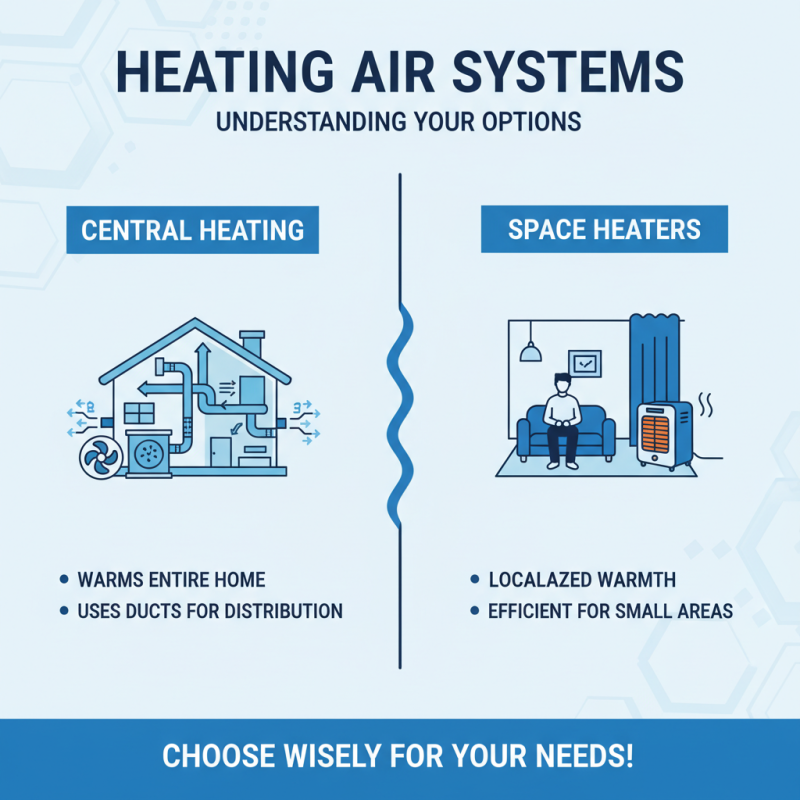
When it comes to heating air systems, understanding your options is crucial. There are several types, each serving different needs. Central heating systems provide consistent warmth throughout the entire home. They rely on a network of ducts to distribute heated air. On the other hand, space heaters offer localized warmth. These systems can be more efficient for smaller areas but might not be suitable for larger spaces.
Tips: Consider the size of your space. A small heater can overheat a tiny room. Conversely, a large system may struggle to effectively heat a small area. Always assess your specific requirements before making a choice.
Radiant heating is another option, heating surfaces directly rather than the air. It provides comfort and can be energy-efficient. However, installation can be complex and costly. Evaluate whether the long-term benefits outweigh the initial investment.
Tips: Factor in energy costs. Some systems may have higher upfront costs but save money over time. Always consider maintenance needs as well, as some systems require more frequent upkeep. Balancing these aspects is key to finding the right heating solution.
Factors to Consider When Choosing Heating Air Systems
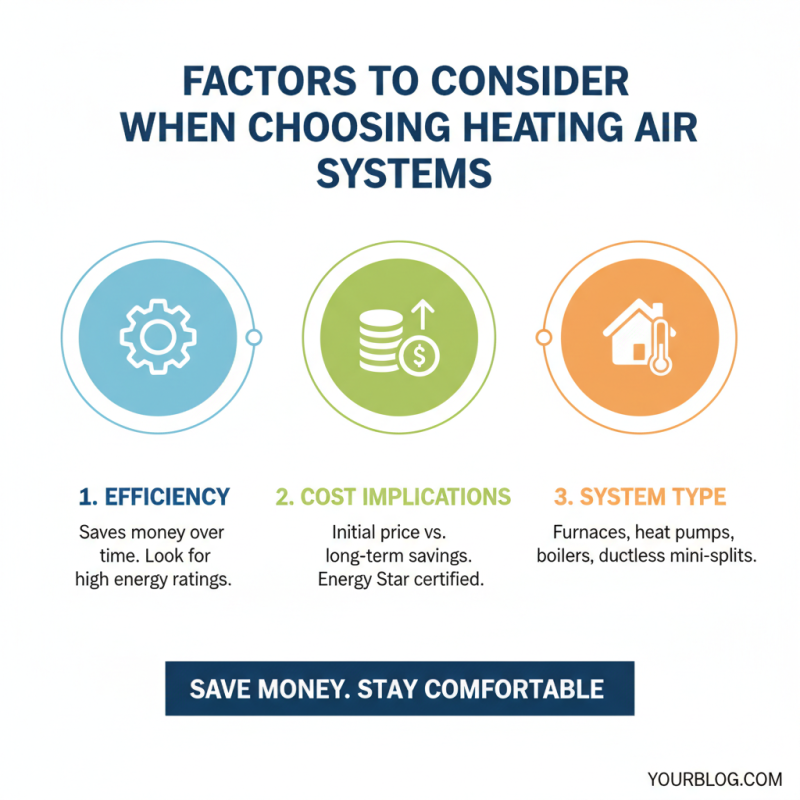
When selecting heating air systems, it's crucial to consider multiple factors. Efficiency is a key element. Higher efficiency systems can save you money in the long run. Look for systems that carry high energy ratings. These ratings can help you assess the long-term cost implications.
Size matters too. An oversized system can lead to energy waste, while an undersized one may struggle to heat your space effectively. It's advisable to have a professional perform a load calculation. Additionally, consider the type of fuel you'll be using. Gas, electric, and oil systems all have their advantages and drawbacks. Your local climate and availability of resources should influence your choice.
Finally, think about maintenance needs. Systems that require more regular upkeep can add to your overall costs. Choose a system that suits your lifestyle and budget. Some options are easier to maintain than others. Reflect on your priorities and make an informed decision. Balancing cost, efficiency, and maintenance is essential for a satisfactory outcome.
Assessing Energy Efficiency in Heating Air Systems
When evaluating heating air systems, energy efficiency stands out as a crucial criterion. According to the U.S. Department of Energy, heating accounts for nearly 42% of energy usage in residential settings. This staggering statistic underlines the importance of selecting systems with high energy ratings. Efficient systems can significantly reduce energy costs while providing comfortable heating. For instance, systems with an Energy Efficiency Ratio (EER) of 11 or higher are considered highly efficient, potentially saving homeowners over 30% in energy bills annually.
Assessing energy efficiency involves looking at various performance metrics. The Seasonal Energy Efficiency Ratio (SEER) is another key measure to consider. The U.S. Environmental Protection Agency indicates that systems with a SEER rating of 14 or more are notably efficient. Proper installation also matters; even the best systems perform poorly without proper setup. A report from the American Council for an Energy-Efficient Economy highlights that up to 30% of energy can be wasted due to improper installation.
Reflecting on these elements can lead to better choices. Many consumers unknowingly select systems without considering long-term energy consumption. By prioritizing energy efficiency, homeowners not only save money but also contribute to sustainable living. This shift requires a blend of informed choices and awareness of one’s needs, which remains a challenge in many households. Adopting a strategic approach can bridge this gap.
Energy Efficiency Assessment of Heating Air Systems
Cost Analysis of Heating Air Systems for Homeowners
Choosing the right heating air system is crucial for homeowners. A cost analysis can shed light on the long-term implications of different systems. According to the U.S. Department of Energy, homeowners can spend between $1,400 and $2,000 a year on heating. This range varies with efficiency ratings and system types. Understanding these costs upfront can prevent financial strain later.
Consider high-efficiency systems. They typically have a higher upfront cost but can save significant money over time. The Energy Policy Act of 2005 estimated that energy-efficient heating systems could lower energy bills by 20% to 50%. However, not all homeowners will see immediate savings. Some may face higher maintenance fees and installation costs. A careful evaluation of the total lifecycle cost is essential.
Don't overlook the impact of local climate. In warmer regions, a less robust system may be sufficient. In colder climates, a higher capacity unit often becomes necessary. This balancing act can determine your system's overall effectiveness and efficiency. It's a matter of aligning your heating needs with the realities of your living situation. Reflecting on both current and future needs can lead to wiser choices.
Maintenance and Longevity of Heating Air Systems
Proper maintenance is essential for the longevity of heating air systems. Regular check-ups can help prevent costly repairs. A technician can identify minor issues before they escalate. Dust and debris build-up can lead to inefficiency. Clogged filters reduce airflow and strain the system. Clean, replace filters monthly for optimal performance.
Consider the lifespan of your heating system. Most systems last about 15 years. After this, efficiency decreases. You may notice rising energy bills. Investing in maintenance extends the system's life. Sometimes, we overlook odd noises or fluctuating temperatures. These signs indicate potential problems that need addressing. Don't ignore them. Addressing these issues early can save you money in the long run.
Think about how often you use your heating system. Heavy use during winter increases wear and tear. Seasonal maintenance is key. A reliable service can ensure your system runs smoothly. Trust professionals who follow safety regulations. A well-maintained system is not only efficient but also safe. Routine care fosters a comfortable environment while enhancing your system’s durability.
Why Choose the Right Heating Air Systems for Your Needs? - Maintenance and Longevity of Heating Air Systems
| System Type |
Energy Efficiency Rating |
Average Lifespan (Years) |
Annual Maintenance Cost ($) |
Common Issues |
| Central Heating |
95%+ |
15-20 |
150-300 |
Thermostat issues, duct leaks |
| Heat Pump |
8.0-10.0 HSPF |
15-20 |
200-400 |
Refrigerant leaks, compressor failure |
| Furnace |
80%-98% |
15-30 |
100-250 |
Clogged filters, burner issues |
| Radiant Heating |
High efficiency |
20-30 |
200-350 |
Leaking pipes, improper installation |
| Electric Heating |
100% (no losses) |
10-15 |
100-200 |
Overheating, wiring issues |