Best Heater Bar Options for Global Buyers in 2026
The global heater bar market is evolving rapidly as we approach 2026. Experts estimate that the industry will grow significantly, driven by increased demand in various sectors such as manufacturing and automotive. According to a recent report by Global Market Insights, the heater bar market could reach $1.5 billion by 2026. This growth reflects a shift toward more energy-efficient and sustainable heating solutions.
Renowned industry expert Dr. Emily Chen emphasizes, "Innovation in heater bar technology is crucial for meeting future energy demands." Her insights highlight the importance of investing in advanced materials and designs. While several options exist, choosing the right heater bar comes with its challenges. Factors such as energy efficiency, durability, and application-specific needs must be thoroughly assessed.
Not all heater bars are designed equally, and some may underperform under certain conditions. Buyers should focus on reliable providers that demonstrate expertise in the heater bar domain. Quality certification and customer feedback play significant roles in making informed decisions. Navigating this complex landscape requires ongoing reflection and adjustment to meet evolving standards and expectations.

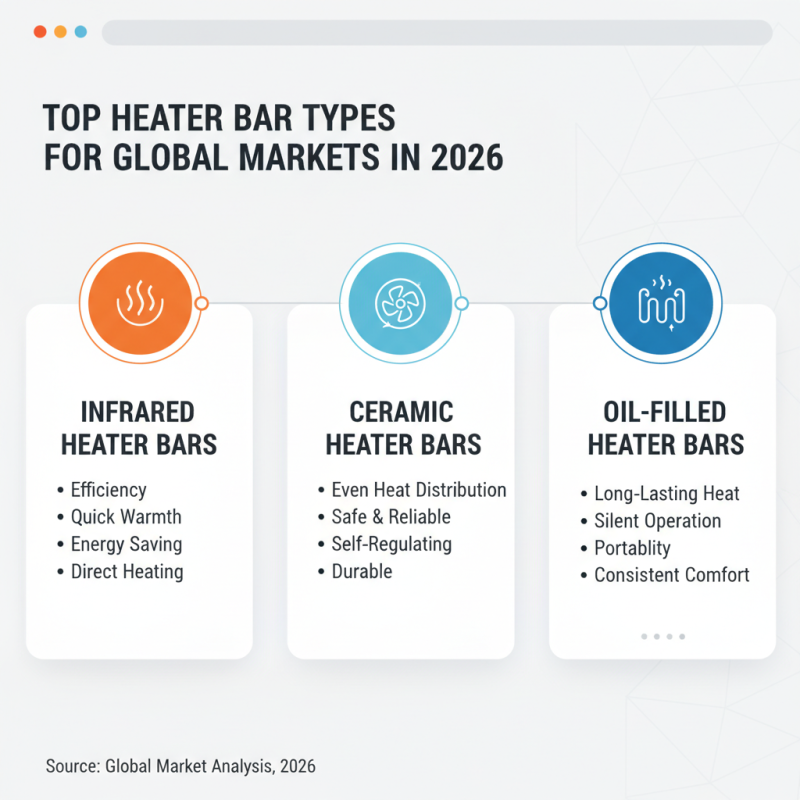
Top Heater Bar Types Available for Global Markets in 2026
Heater bars are essential for various applications, providing warmth and comfort in diverse environments. In 2026, several types of heater bars stand out in global markets. Infrared heater bars are popular for their efficiency. They quickly warm up spaces while saving energy. These bars emit heat directly to objects, creating a comfortable atmosphere.
When exploring heater bar types, consider your specific needs. Some heater bars are designed for outdoor use, while others are more suited for indoor settings. There are also options with adjustable heating settings, allowing for customized comfort.
Tips: Prioritize safety when selecting a heater bar. Look for models with safety features like automatic shut-off. Regular maintenance can enhance performance and longevity. Incorporate energy efficiency ratings into your decision-making process, as it impacts your long-term costs.
Always reflect on your choice. Not every heater bar fits all spaces. Take time to assess your environment and heating requirements carefully. Consider the space's insulation and size to ensure adequate heating. Through mindful selection, you’ll create a warm, inviting atmosphere.
Key Features to Consider When Choosing Heater Bars
When selecting a heater bar, several features are critical for making an informed decision.
One major aspect is energy efficiency. Many consumers prefer options that
minimize energy consumption while still providing adequate heat. Look for models with adjustable settings that
allow you to control the output according to your needs. This flexibility can lead to cost savings in the long run.
Another factor to consider is safety features.
Automatic shut-off options are vital, especially in homes with children or pets.
Overheating can be a significant risk, so prioritize models that include these safety mechanisms.
Durability is also essential. Choosing a heater bar made from high-quality materials
will enhance longevity, saving you from frequent replacements.
Aesthetic appeal plays a role too. Many buyers want a heater that blends with their home decor. Some heater bars
come in various designs and colors, allowing for personal expression while meeting functional needs.
It’s a balance of form and function. No model is perfect, and it’s necessary to acknowledge that
every choice has potential drawbacks that require reflection.
Comparative Analysis of Leading Heater Bar Brands
As the demand for efficient heating solutions continues to rise, many buyers are seeking effective heater bars for various applications. The market shows a significant growth trajectory, with a projected increase of approximately 7% annually through 2026. An analysis of leading brands in this category reveals varying strengths in performance and reliability, crucial for consumers making informed choices.
One key consideration is energy efficiency. Many modern heater bars feature advanced insulation technologies, which can lead to energy savings of up to 30%. This appeals to eco-conscious consumers. Additionally, a survey found that durability and safety are top priorities for 68% of users. Though many options exist, not all meet the stringent safety standards. It is vital to assess certifications and quality assurances. This is where buyers must tread carefully, as not every product claims the same level of reliability.
While many heater bar options deliver impressive heating capabilities, some fall short in user experience. Issues such as uneven heat distribution or noisy operation can affect satisfaction. Understanding these nuances can lead to better purchasing decisions. Potential buyers should read reviews and seek expert opinions to navigate this competitive landscape effectively.
Best Heater Bar Options for Global Buyers in 2026
Environmental Impact of Heater Bars: Sustainable Options
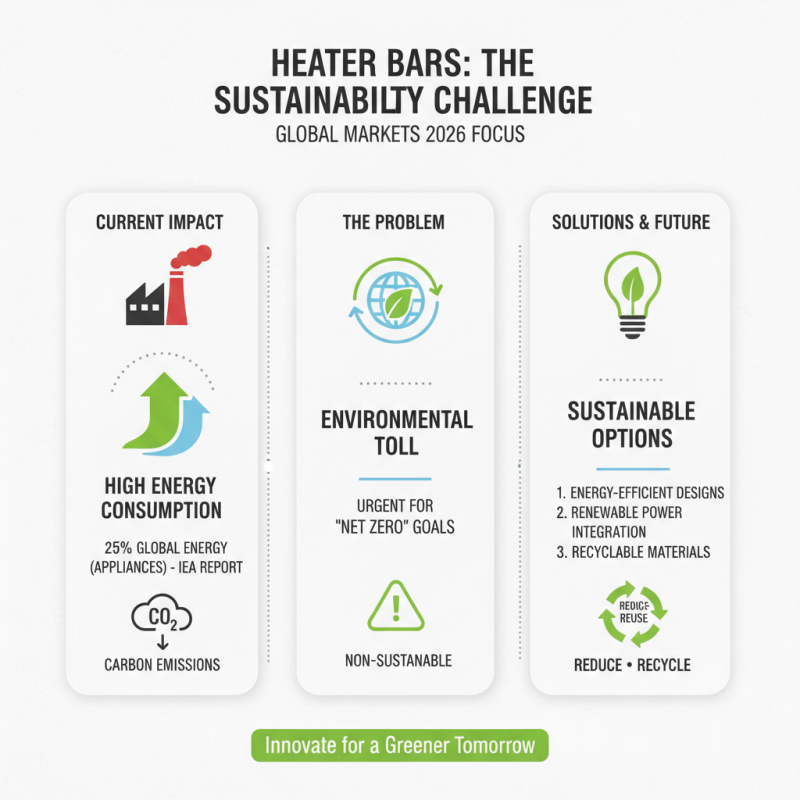
When considering heater bars for global markets in 2026, the environmental impact stands out. Heater bars traditionally consume a lot of energy, contributing to carbon emissions. According to a report by the International Energy Agency, appliances account for about 25% of global energy consumption. Thus, finding sustainable options is crucial.
Many modern heater bars now utilize eco-friendly materials and energy-efficient technology. For instance, infrared heater bars provide warmth without heating the air, reducing energy waste. Furthermore, a study indicated that adopting energy-efficient heater systems can lower operational costs by 30%.
Tips: Choose heater bars with energy star ratings. This ensures compliance with environmental standards. Look for options made from recyclable materials as well. They minimize landfill waste and support a circular economy. Reflect on the long-term environmental footprint when selecting heating solutions. Consider not only the immediate benefits but the impact on the planet's future.
Market Trends and Innovations in Heater Bar Technology
The heater bar market is undergoing significant changes as we approach 2026. Innovations in technology are shaping how consumers choose their products. Reports from industry analysts indicate that the global heater bar market is expected to grow by 8% annually, driven by demand for energy-efficient solutions and better performance.
One of the key trends is the shift toward smart heater bars. These devices demonstrate advanced features such as integrated sensors and Wi-Fi connectivity. Users can control heating through mobile apps, promoting energy savings while enhancing convenience. However, the adoption rate varies. Some regions experience hesitation due to high initial costs. This might lead to missed opportunities for robust sales.
Another trend is the focus on sustainable materials in heater bar production. Manufacturers aim to reduce environmental impact, opting for recyclable components. While this is a positive step, the durability of these materials can sometimes be questionable. As companies innovate, ensuring long-term reliability is critical. Balancing eco-friendliness with performance is an area that needs further exploration in the coming years.