What is Battery Heat Tape and How Does It Work?
Battery Heat Tape is becoming crucial in various industries. This innovative product is designed to maintain optimal battery temperatures. According to the latest report by the Energy Storage Association, improper temperatures can reduce battery efficiency by up to 20%.
Dr. Emily Chang, an expert in thermal management solutions, states, "Battery Heat Tape prevents overheating and ensures consistent performance." This tape employs advanced materials to provide uniform heating across battery surfaces. As electric vehicles and renewable energy storage grow, misuse or misunderstanding of Battery Heat Tape could lead to performance issues.
Some might overlook the installation specifics. Proper application is essential for effectiveness. Misalignment can hamper performance, making it a learning point for manufacturers. In a rapidly evolving market, ongoing education about Battery Heat Tape is critical for maximizing its benefits.
What is Battery Heat Tape?
Battery heat tape is a specialized conductive tape designed for warmth. It is crucial in colder environments where battery performance can drop. When temperatures fall, batteries lose efficiency. Heat tape helps maintain optimal performance by providing consistent warmth. This is important for applications in electric vehicles and remote equipment.
Using battery heat tape involves careful installation. It should be wrapped snugly around the battery. Be careful not to overlap too much, as this can lead to hotspots. A proper connection is vital for effective heating. Some users struggle with achieving the right balance. Too much heat can damage the battery. Too little won't provide the needed warmth.
Tips: Monitor battery temperature regularly. This ensures the heat tape is functioning as intended. If the battery feels excessively hot, stop using it immediately. Also, check for signs of wear on the tape. Replace it if it shows damage. Taking these steps can extend battery life and improve performance, but it requires diligence.
The Purpose and Benefits of Battery Heat Tape
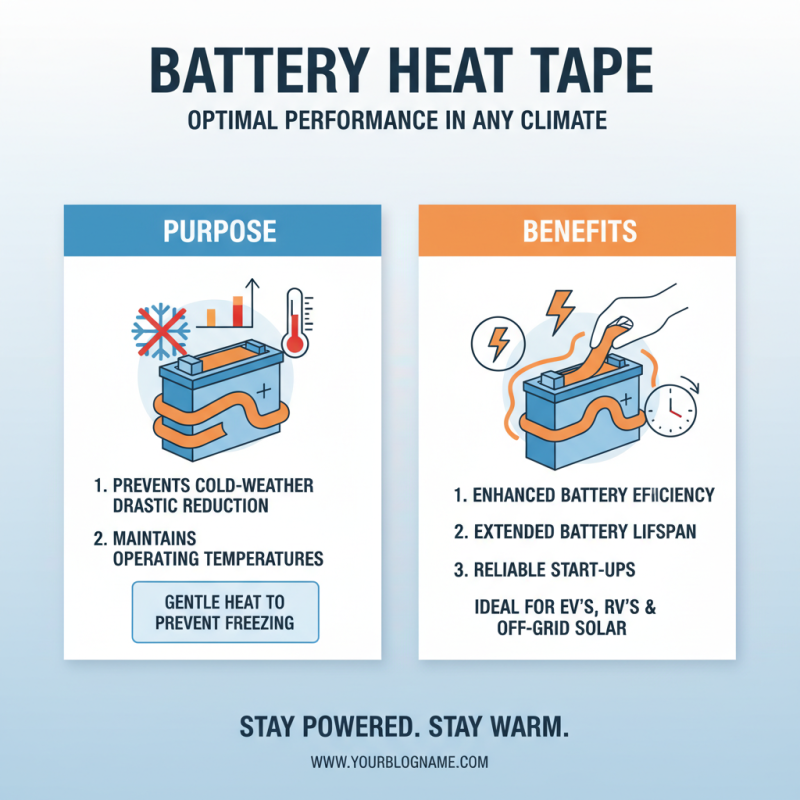
Battery heat tape serves an essential role in various applications. It helps maintain optimal temperatures for batteries, especially in cold conditions. Cold weather can reduce battery performance significantly. By using heat tape, batteries stay warm and functional. The tape wraps around the battery and applies gentle heat to prevent freezing.
One of the main benefits of battery heat tape is enhanced efficiency. A warm battery performs better, leading to improved energy output. Additionally, this wrap can extend battery life. It protects against extreme temperatures that could cause damage. Without this simple solution, many batteries could fail unexpectedly.
Choosing the right type of heat tape can be tricky. Not all options perform equally well in different environments. Users may find it hard to assess which product fits best. Proper installation is another factor. If not done correctly, the benefits may not be fully realized. It’s crucial to follow guidelines for optimal results.
How Battery Heat Tape Works Mechanically
Battery heat tape is a versatile solution for maintaining optimal temperatures in battery applications. It consists of a flexible, adhesive material that can be easily applied to batteries. The heat produced by the tape ensures that batteries operate efficiently in cold environments. Temperature drops can significantly affect battery performance. Keeping them warm extends their lifespan and improves power output.
Mechanically, the heat tape functions through resistive heating. When electric current passes through the tape, it generates heat. The resistance of the tape contributes to temperature control. Users must consider the material's thickness and composition. If the tape is too thin, it may not provide adequate warmth. Conversely, overly thick tape could lead to overheating. Striking a balance is essential. Users should be mindful of these mechanical properties.
Installation is straightforward but may require precision. Ensuring good contact between the tape and the battery improves heat transfer. Improper installation might lead to inconsistent heating, causing unpredictable performance. Some feedback loop systems can adjust the output based on temperature readings. Yet, these systems might still not meet every requirement under extreme conditions. Regular checks and adjustments are important for optimal functioning. Understanding these mechanical nuances can lead to better results.
What is Battery Heat Tape and How Does It Work?
| Feature |
Details |
| Material |
Flexible polymer blend with embedded heating elements |
| Function |
To provide heat to battery packs in cold conditions |
| Operating Temperature |
Typically between 0°C to 70°C |
| Power Source |
Connected to the battery or a separate power supply |
| Applications |
Electric vehicles, power tools, and outdoor equipment |
| Installation |
Adhesive backing for easy application to battery surfaces |
| Benefits |
Improves battery performance in low temperatures, reduces risk of voltage drop |
| Safety Features |
Over-temperature protection systems integrated |
Installation Process for Battery Heat Tape
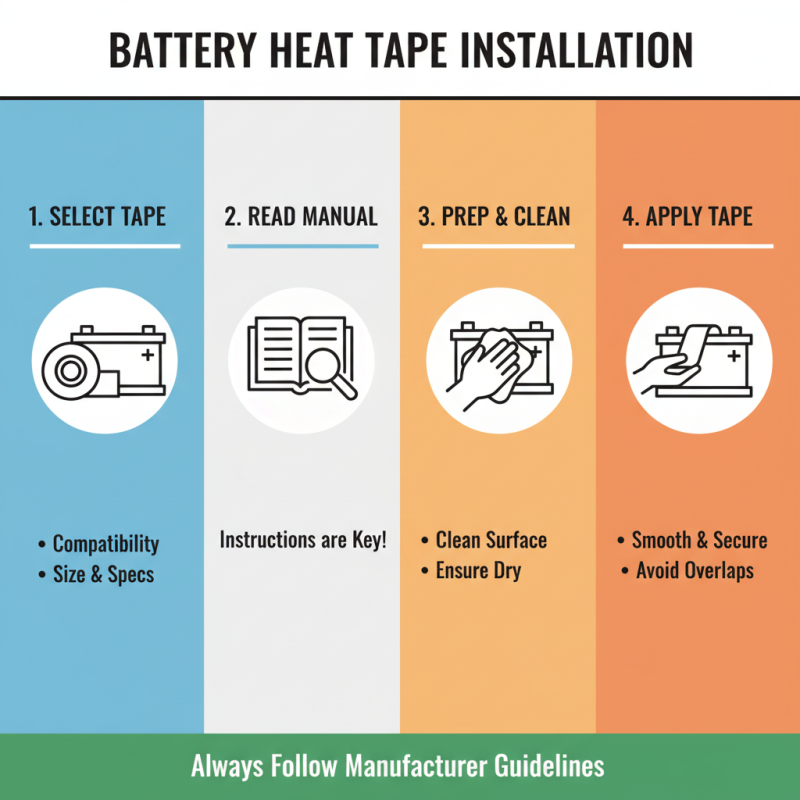
Installing battery heat tape requires careful steps. The process begins with selecting the right type of tape for your battery. Ensure it is compatible with your battery's size and specifications. It’s important to read the instructions carefully for the best results.
Next, clean the battery surface. Remove dirt and grime to allow proper adhesion. Use a damp cloth for this step. Once the surface is clean, measure the length needed. Cut the heat tape accordingly. This part needs attention to detail. If the tape is too short, it won’t effectively cover the battery.
After cutting, peel off the backing of the tape. Place it firmly on the battery, smoothing it out to avoid air bubbles. This is where precision matters. Ensure it is uniform and secure. Finally, connect the tape to the power source. Monitor the setup closely at first to check for any issues. Make adjustments if necessary. This part of the process can sometimes feel tricky, and small mistakes could lead to inefficiency.
Safety Considerations and Best Practices for Use
When using battery heat tape, safety is crucial. This product keeps batteries warm, enabling them to perform better in cold conditions. However, improper usage can lead to issues, including battery damage or overheating. Always ensure the tape is applied correctly, avoiding contact with terminals or any exposed wiring. A loose application can reduce efficiency, causing the tape to underperform.
Monitoring temperature is essential. Overheating can affect battery life or performance. Regular checks can prevent potential problems. If the tape feels too hot to the touch, it may require adjustments. Also, avoid covering any vents or air passages around the battery, as this can trap heat. Ensuring proper airflow is vital to maintain optimal battery temperature.
In case of any sign of damage to the tape or battery, stop using it immediately. Replace worn or frayed tape promptly to avoid risks. Remember, the goal is to enhance battery performance while ensuring safety. Regular inspection and careful handling are necessary practices every user should adopt. These steps can significantly reduce the chances of mishaps and enhance overall efficiency.
Battery Heat Tape Temperature Performance
As the temperature increases, the efficiency of battery heat tape improves, which is crucial for preventing battery failures in cold conditions.