2026 Top Trends in Duraband Nozzle Band Heater Technology?
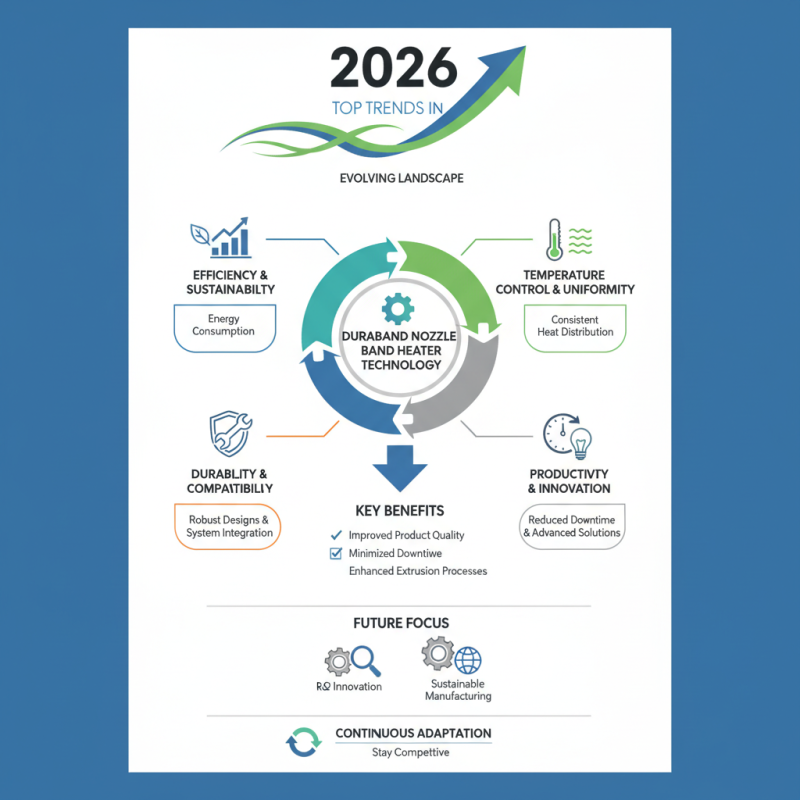
As we approach 2026, the landscape of thermoplastic processing is evolving significantly. One of the most notable advancements is in Duraband Nozzle Band Heater technology. This innovative solution is designed to enhance efficiency and temperature control in extrusion processes. Companies seek new ways to minimize energy consumption and improve productivity.
The Duraband Nozzle Band Heater serves this purpose by ensuring uniform heat distribution. It addresses common issues such as overheating and inconsistent temperatures. Users have reported better product quality and reduced downtime, revealing its practical advantages. However, there is still room for improvement in durability and compatibility with various systems.
While the future looks promising, challenges persist. Manufacturers need to focus on innovation and sustainability. Feedback from users highlights a need for more robust designs. It’s essential to consider the long-term performance of Duraband Nozzle Band Heaters. As the industry evolves, continuous adaptation will be key to maintaining competitiveness in this fast-paced environment.
Advancements in Duraband Nozzle Band Heater Materials and Designs
In recent years, there have been notable advancements in Duraband nozzle band heater materials. Manufacturers are now experimenting with high-performance ceramics and advanced polymers. These materials promise better heat resistance and longevity. The shift to lighter materials also aids in handling.
Design improvements are equally significant. Many heating systems now feature customizable options. This allows for better fitting to various machinery. Enhanced insulation technologies are helping to improve energy efficiency. This progress can reduce energy costs and improve product reliability.
However, challenges still exist in the industry. Compatibility issues can arise when integrating new materials into existing systems. Technical trials are often necessary and can be time-consuming. Further research is needed to refine these innovations. The push for optimization is ongoing, and the journey continues.
2026 Top Trends in Duraband Nozzle Band Heater Technology
| Trend |
Description |
Material Innovations |
Design Improvements |
Energy Efficiency |
| Advanced Insulation |
Use of high-performance insulation materials to reduce heat loss. |
Ceramic-based insulation that withstands higher temperatures. |
Streamlined designs for optimal thermal efficiency. |
Improved energy savings up to 20% compared to traditional heaters. |
| Smart Technology Integration |
Incorporation of IoT for monitoring and control. |
Use of lightweight conductive materials for better responsiveness. |
Compact designs for easier installation in confined spaces. |
Optimized control algorithms reducing energy waste. |
| Durability Enhancements |
Improved resistance to mechanical wear and thermal shock. |
Reinforced materials that extend lifespan significantly. |
Ruggedized designs for harsh environments. |
Increased durability leads to lower replacement costs. |
| Modular Systems |
Adoption of modular designs for flexibility and maintenance. |
Interchangeable parts made from advanced composites. |
Easier upgrades without complete system replacements. |
Reduces downtime and increases operational efficiency. |
| Temperature Control Precision |
Enhanced control systems for accurate temperature regulation. |
Innovative alloys that improve thermal conductivity. |
Ergonomic control interfaces for user-friendly operation. |
Maximizes process efficiency and product quality. |
Integration of Smart Technology in Nozzle Band Heater Systems
The integration of smart technology into nozzle band heater systems is transforming industrial heating. Manufacturers are adopting IoT devices to enhance efficiency and monitoring. These smart systems can communicate data in real-time. Temperature fluctuations can be detected instantly, allowing for prompt adjustments. This leads to optimized energy consumption, reducing costs.
However, there are challenges in implementing these advanced solutions. Some facilities require upgrades to existing infrastructure. Compatibility issues may arise, leading to technical glitches. Workers may also need training to fully leverage these technologies. Such obstacles could delay the potential benefits.
Despite these hurdles, the future looks promising. Predictive maintenance features can alert users before failures occur. Automation may improve worker safety by minimizing manual intervention. As technology continues to evolve, nozzle band heaters will likely become more efficient and reliable. These advancements will reshape production processes in various industries.
Energy Efficiency Trends in Duraband Nozzle Band Heater Applications
Energy efficiency is a growing concern in various industries. In 2026, Duraband nozzle band heater technology is expected to reflect this trend more than ever. Manufacturers are turning to advanced materials. These materials enhance thermal conductivity. As a result, less energy is wasted in heating processes.
Optimizing temperature control is crucial for energy savings. Improved sensors allow for accurate monitoring. Real-time data helps identify inefficiencies. Users can adjust parameters quickly. This leads to a tangible reduction in energy consumption.
Tips: Consider routine maintenance. Regular checks ensure optimal performance. Clean any residue that collects. This simple step can significantly boost efficiency. Moreover, evaluate your heating processes regularly. Reflect on energy usage patterns. This can reveal hidden areas for improvement.
2026 Top Trends in Duraband Nozzle Band Heater Technology
Safety Enhancements in Duraband Nozzle Band Heater Technologies
As industrial operations evolve, safety remains a priority. The Duraband nozzle band heater technology is no exception. Enhanced safety features are becoming increasingly essential. Improved thermal insulation minimizes the risk of burns. This is crucial for workers handling machinery. Clear temperature indicators provide immediate feedback. They help in preventing overheating incidents.
The design of these heaters must address potential hazards. However, not all manufacturers achieve this effectively. Some heaters still overlook basic safety protocols. This can lead to workplace accidents or equipment damage. Regular maintenance checks are vital but often neglected. The focus should shift to proactive measures. A culture of safety must be embraced throughout the industry.
User-friendly interfaces could simplify operation. Training employees on safety practices is fundamental. Some facilities may still struggle with this aspect. Constant reminders and visible safety guidelines can help. Collaboration with safety experts is recommended, but often, it gets sidelined. As the technology matures, we must prioritize these enhancements. Workers deserve a safer environment while optimizing performance.
Market Growth and Future Perspectives for Nozzle Band Heaters in Industry
The nozzle band heater market is witnessing significant growth driven by increasing demands for efficient industrial heating solutions. According to recent market research, the global nozzle band heater market is forecasted to grow at a compound annual growth rate (CAGR) of 6.5% over the next five years. This growth reflects the rising need for precision heat management in various sectors such as plastics, food processing, and pharmaceutical industries.
Many industries are realizing the importance of energy efficiency. A report indicated that upgrading to advanced nozzle band heaters can reduce energy consumption by up to 30%. However, not all companies have adopted these innovations, leaving potential savings on the table. The integration of IoT and smart technology remains underexplored, creating gaps in operational efficiency.
While technological advancements are promising, there is room for improvement in educating industries about these benefits. Misalignment between available technology and industry needs can hinder progress. Additionally, manufacturers face challenges in the customization of heaters for specific applications, causing delays and inefficiencies. Addressing these issues can unlock more potential in the market, aligning product offerings with real-world industrial needs.